 Any / overcast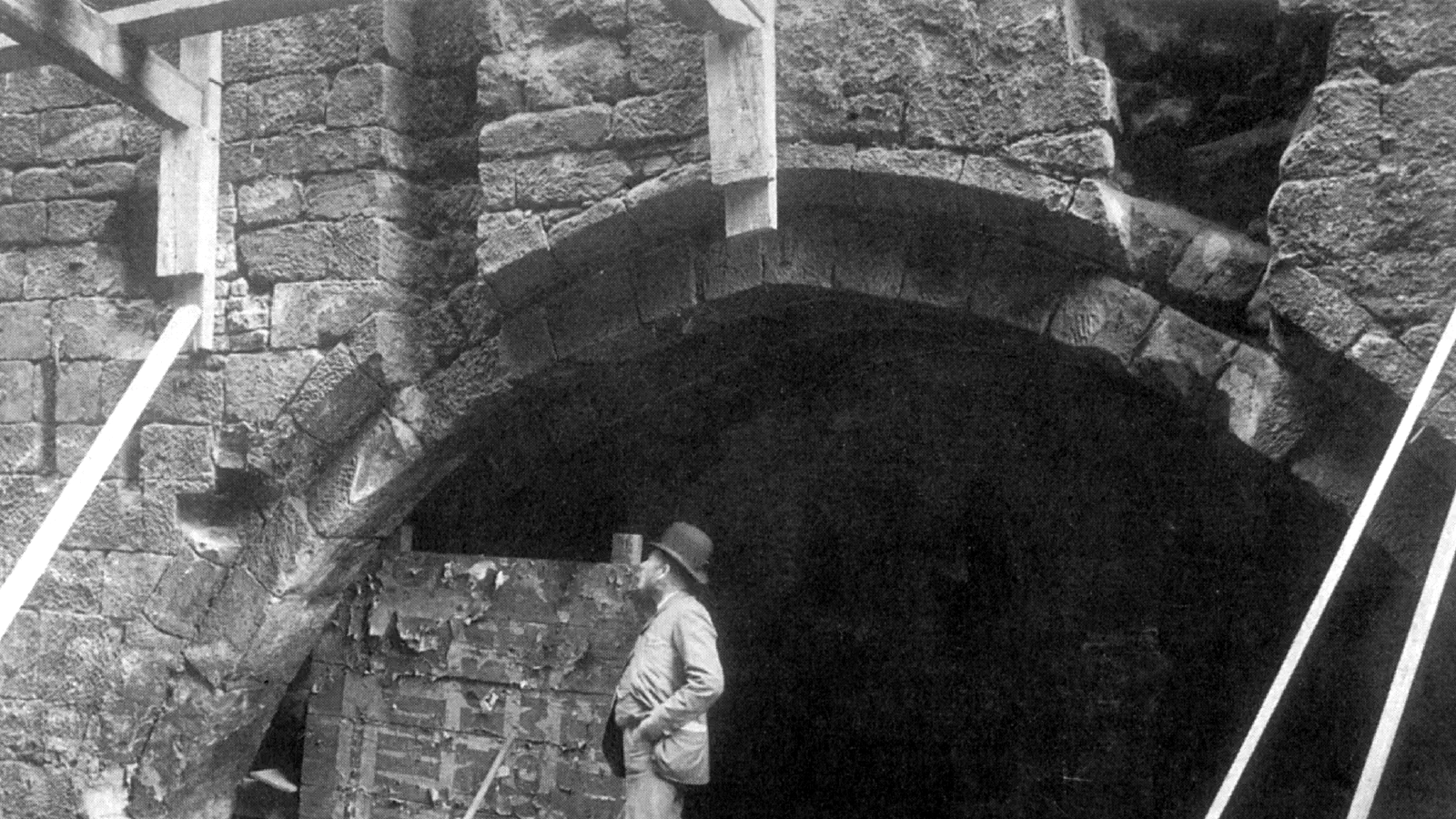
Best at any / overcast
The Hanging Bridge
Medieval Quarter · ManchesterSome gear links on this page are affiliate links — if you buy through them we may earn a small commission at no extra cost to you. See our affiliate disclosure.
What is The Hanging Bridge?
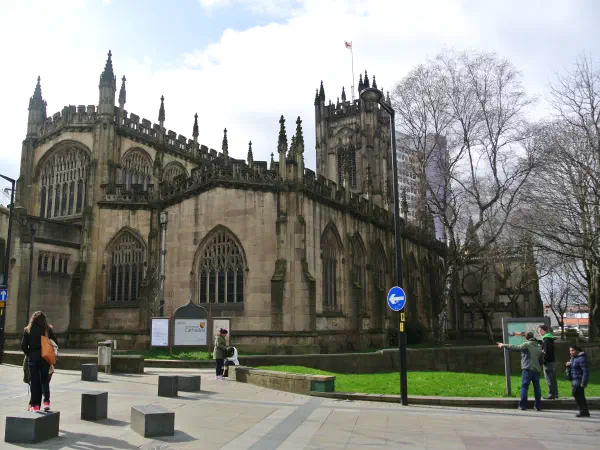
The Hanging Bridge is one of Manchester’s oldest surviving structures, dating back to 1421. Now largely hidden beneath the modern Cathedral Visitor Centre, this ancient stone bridge once spanned the Hanging Ditch, a defensive waterway.
Why Shoot Here?
- Ancient History: Capturing a structure that is over 600 years old provides a unique sense of time and history in the middle of a modern city.
- Architectural Contrast: The ancient stone arches are strikingly contrasted with the modern glass and steel of the Visitor Centre that now surrounds them.
- Hidden Gem: As it’s located inside a building, it’s a spot that many visitors miss, making for a unique and surprising photograph.
- Subtle Lighting: The bridge is often subtly lit, highlighting the textures of its ancient stonework.
Getting There
Victoria Metrolink and rail station is a three-minute walk and Manchester Arndale about five. NCP Manchester Arndale is the nearest car park at roughly £8–12 per day. The bridge is in the medieval quarter, immediately beside Manchester Cathedral — you will find the Visitor Centre entrance rather than the bridge itself from the street.
The Hanging Bridge sits inside the Manchester Cathedral Visitor Centre, with only part of it visible from the street, so this is an indoor shoot governed by the centre’s opening hours rather than by daylight. That has one large advantage: weather is irrelevant here. Manchester Cathedral is next door and Chetham’s Library a couple of minutes further — the medieval quarter to Spinningfields walk covers all three.
Photography FAQ
Can you photograph the Hanging Bridge?
It is inside the Cathedral Visitor Centre, which is open to the public, and photography of the bridge is normally fine. Check on arrival whether a tripod is acceptable — the viewing area is not large and staff will have a view on it. Mid-morning on a weekday is when you are least likely to be in anyone’s way. If an event or service is running in the centre, defer to that.
Is it worth going in bad weather?
It is the best wet-weather option on this site. The bridge is fully enclosed, artificially lit, and identical whatever the sky is doing outside — rain, wind and flat grey light are all irrelevant. If a canal or outdoor shoot falls through, this is the substitute that does not depend on conditions. The artificial spotlighting is consistent through opening hours, so there is no good or bad time of day for the light itself.
How do you photograph it well?
Two frames are worth having. Put a 1421 stone arch sharp in the foreground with the glass-and-steel roof of the Visitor Centre visible through or above it at 24–35mm — that tells the 600-year gap in one image. Then move in with a 50–85mm at f/4–f/5.6 on the stonework itself: the blocks are worn, pitted and hand-tooled, and the spotlight positions throw enough shadow variation to make that texture read.
How big is it?
Smaller than people expect — not much wider than a person, which is the thing photographs of it usually fail to convey. Putting a companion in frame near the arches is the most useful single compositional decision here: it shows both how compact the structure is and how completely it has been absorbed into the modern building around it, which is the actual story of the site.
What was the Hanging Bridge?
A stone bridge dating to 1421, one of Manchester’s oldest surviving structures, which crossed the Hanging Ditch — a defensive watercourse that ran where the city centre now stands. The ditch was filled and built over, and the bridge survived beneath ground level until it was uncovered and enclosed within the Visitor Centre. Long exposures of 1–4 seconds saturate the warm tungsten lighting into the stone while the surrounding modern materials stay comparatively neutral, which emphasises the age difference visually.
Best Times to Shoot
- Weekday mid-mornings (10:00–12:00) — The Manchester Cathedral Visitor Centre is quietest mid-morning on weekdays. Fewer visitors give you space to set up a tripod on the viewing area without disrupting others or having people walk through long exposures. The bridge’s artificial spotlighting is consistent throughout opening hours, so time of day outside does not affect the interior light.
- Any weather — it is always indoors — Unlike every other spot in this guide, the Hanging Bridge is fully enclosed inside the Visitor Centre. Rain, wind, and poor light are irrelevant; you get the same warm stone and directional artificial illumination whatever the conditions outside. This makes it a reliable wet-weather alternative if a canal or outdoor shoot falls through.
- After visiting Manchester Cathedral — The Visitor Centre is immediately adjacent to the cathedral entrance. A photography session that starts with the cathedral exterior, moves through the nave and misericords, and then drops into the Visitor Centre to see the Hanging Bridge covers both medieval structures in one visit during the same light conditions.
- Open event days — The cathedral occasionally holds heritage events and special guided access days when areas near the bridge are more accessible than usual. Check the cathedral’s events calendar for these sessions.
Composition Ideas
- Stone arch framing the modern structure — Position yourself so that one of the 1421 stone arches is in sharp focus in the foreground and the glass-and-steel roof of the Visitor Centre is visible through or above it. A 24–35 mm lens keeps the arch proportional while showing enough of the modern context to tell the 600-year time-gap story clearly.
- Close-up texture of the medieval stonework — The stones of the Hanging Bridge are worn and pitted in ways that read as age under raking artificial light. Use a 50–85 mm lens at f/4–f/5.6 to capture grain, moss staining, and the hand-tooled surface of individual blocks. The spotlight positioning within the Visitor Centre creates enough shadow variation to reveal these textures effectively.
- Long exposure for warm stone tones — The artificial lighting is warm tungsten or warm-LED; longer exposures of 1–4 seconds (camera on a tripod, fired with a remote shutter release ) saturate the stone with these tones while the surrounding modern materials stay comparatively neutral. This emphasises the age of the bridge visually.
- Human scale reference — Ask a companion to stand near the arches. The bridge is surprisingly small — not much wider than a person. Including a figure shows just how compact this ancient structure is and how completely it is embedded within the modern Visitor Centre, which is the key curatorial story of the site.
How to shoot it
Lens
A 16–35mm wide exaggerates scale and verticals; a 24–70mm keeps proportions natural. A tilt-shift tames converging lines.
Settings
f/8–f/11 for front-to-back sharpness, ISO 100, and meter for the highlights so detail in the stonework holds.
Composition
Hunt for symmetry and repetition, keep verticals straight, and use doorways or arches to frame the subject.
Timing
Bright overcast suits it best — soft, even light with no harsh shadows — so it works at almost any time of day.
More in Medieval Quarter
See the area →Nearby spots
Any / overcast Any / overcast