 Golden hour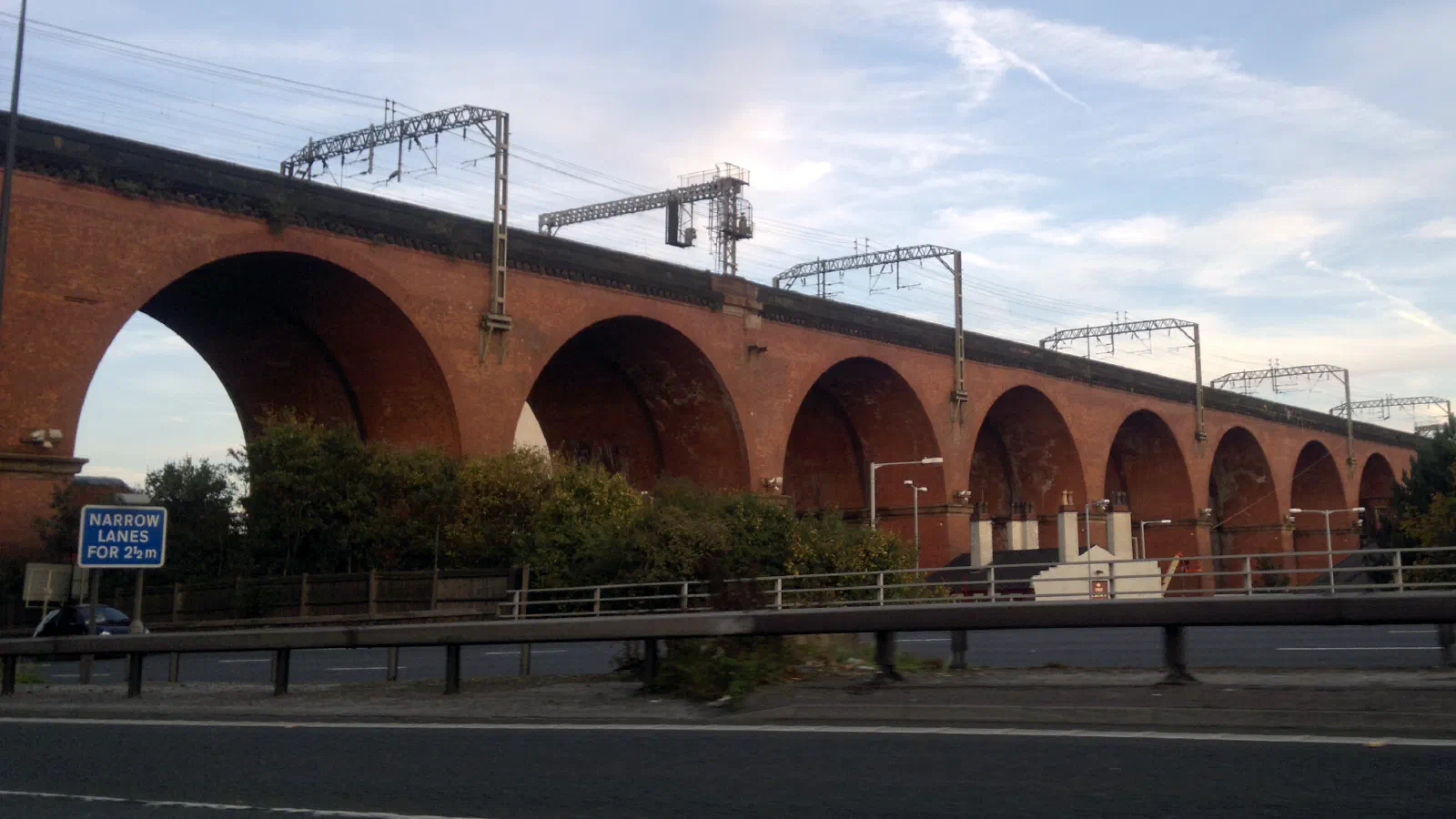
Best at blue hour
Stockport Viaduct
Stockport · ManchesterSome gear links on this page are affiliate links — if you buy through them we may earn a small commission at no extra cost to you. See our affiliate disclosure.
What is Stockport Viaduct?
The Stockport Viaduct is one of the largest brick structures in the United Kingdom and a iconic symbol of the town of Stockport. Completed in 1840, this Grade II listed railway viaduct carries the West Coast Main Line over the River Mersey. Its 22 massive arches dominate the local skyline and provide a stunning example of Victorian railway engineering.
Why Shoot Here?
- Massive Scale: The sheer size of the viaduct is incredible. Use a wide-angle lens to capture the full span or a telephoto lens to compress the arches.
- Urban Landscape: The viaduct sits high above the town, offering dramatic views as it passes over roads, buildings, and the river.
- Night Photography: The viaduct is often illuminated at night, making it a spectacular subject for long-exposure shots.
- Unique Perspectives: Explore the surrounding streets and bridges for various angles that showcase the viaduct’s height and architectural detail.
Getting There
There is no tram to Stockport. Stockport rail station is a five to eight-minute walk and is served frequently from Manchester Piccadilly, which makes this an easy trip without a car. Drivers have NCP Stockport, or free street parking on Brinksway — the latter is also where several of the best viewpoints are, so it is the one to aim for.
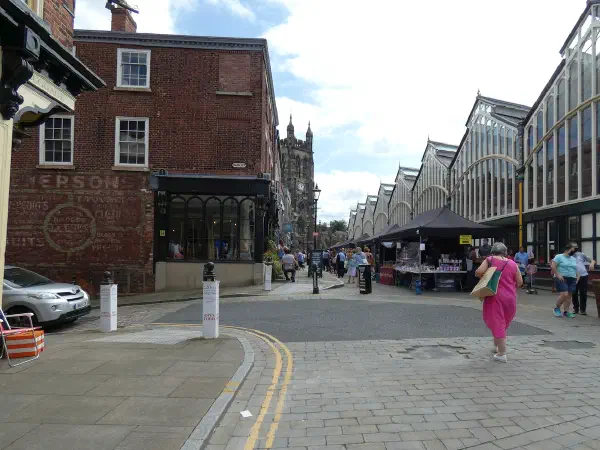
You do not go inside anything here: the viaduct is photographed from the road bridges and public paths around it, all of which are freely accessible at any hour. Brinksway gives the classic elevated view of the full span, the M60 footpath is the other main vantage, and the riverside walkway puts you underneath. Stockport Market Place and St Mary’s Church are ten minutes uphill in the old town — the Stockport old town and viaduct walk connects them and finishes here for blue hour.
Photography FAQ
Can you photograph Stockport Viaduct?
Yes, and there is nothing to arrange. Everything you need is public highway and public footpath — the road bridges, Brinksway, the M60 footpath and the riverside walkway — all open at any hour and all free. Tripods are unrestricted. The only real caution is traffic: the best elevated views are from road bridges with narrow pavements, so stand well back from the kerb and do not set up where a tripod leg intrudes into the carriageway.
Where is the best place to photograph the viaduct from?
Brinksway for the classic view — it is elevated enough to give you the full span and it is where the arches align for the telephoto compression shot. The M60 footpath is the other distance viewpoint. For the opposite effect, get underneath on one of the roads that pass beneath the structure and shoot straight up at 16–24mm; the individual arch span is 19 metres and that only registers from directly below.
What is the best time to shoot Stockport Viaduct?
Blue hour, 20–40 minutes after sunset. The illumination comes on at dusk and washes the 22 arches in warm amber, which reads against the deep blue still in the sky — an hour later you have lit arches on black and it is a weaker image. Shoot it from the Brinksway bridge. After full dark, 8–20 second exposures on a tripod smooth foreground traffic while the lit arches stay pin-sharp. Overcast daylight is the choice for brick texture.
What lens do I need for the viaduct?
Both ends of the range. It is 545 metres long, so a 24–35mm from a distant viewpoint is what fits the full span in one frame — include the town beneath the arches for scale. A 70–200mm does the more distinctive shot: from the right position on Brinksway it compresses the 22 arches into a stacked, repeating rhythm of arch and pier with the gaps between them collapsed. A 16–24mm covers the view from underneath.
Can you get a reflection in the River Mersey?
Sometimes. The viaduct carries the West Coast Main Line over the Mersey, and on calm mornings after rain — when the level has risen and the surface has settled — you can compose at 35–70mm with the structure above the waterline and its reflection below. It is not reliable: the river is often neither deep nor still enough. Treat it as a bonus on a morning visit rather than the reason for the trip.
Best Times to Shoot
- Blue hour (20–40 minutes after sunset) — The viaduct’s illumination system activates at dusk and produces a warm amber wash across the 22 arches. At blue hour, this warm light contrasts against the remaining deep blue in the sky above, and the River Mersey below sometimes holds a partial reflection of the lit structure. Shoot from the Brinksway road bridge for this classic view.
- Night for long exposures — After full dark, the viaduct illumination is at its most impactful and the surrounding area is quieter. Set a sturdy tripod like the Manfrotto Befree Advanced Carbon on the M60 footpath or the riverside walkway and use exposures of 8–20 seconds to smooth any traffic movement in the foreground while keeping the viaduct’s lit arches as the static, pin-sharp subject.
- Overcast days for brick texture — The viaduct is built from approximately 11 million bricks, and the texture and colour variation of this masonry is best revealed in flat, diffused light. Direct sun creates deep shadow in the arch recesses and highlights the upper brick face disproportionately; cloud cover opens the full surface up to a 70–200 mm lens working across the structure.
- Morning from the Mersey side — The east face of the viaduct catches early morning light from around 8:00 in summer, and the River Mersey below provides a foreground element that can reflect the structure in still water. Winter mornings with frost on the riverside vegetation add seasonal texture to the landscape foreground.
Composition Ideas
- Full 22-arch span from a distance — Walk to the M60 footpath or a position on Brinksway and use a 24–35 mm lens to fit the full span of the viaduct into a single frame. The viaduct is 545 metres long, so you need to be at significant distance to capture it in one shot; a wide-angle lens at this distance still only captures the full span with some compression. Include the town below the arches for scale.
- Arches from below on road bridges — Several road bridges and underpasses pass beneath the viaduct structure. Position yourself on the road below and look upward with a 16–24 mm ultra-wide; the massive brick arches overhead compress against each other dramatically and the scale of the individual arch span — 19 metres — is apparent from directly below.
- River Mersey reflection — Find a still stretch of the Mersey below the viaduct and use a 35–70 mm lens to compose with both the viaduct above the waterline and its reflection below. The river is not always deep or still enough for a mirror-perfect reflection, but on calm mornings after rain the water level rises and the surface settles.
- Telephoto compression of repeating arches — A telephoto like the 70–200 mm zoom from one end of the viaduct’s span compresses the 22 arches into a stacked, repeating pattern. From the right position on Brinksway, the arches align and stack tightly; the depth compression of the telephoto eliminates the gaps between them and creates a rhythm of arch, pier, arch, pier that conveys the engineering scale.
How to shoot it
Lens
A 24–70mm covers most scenes; a 70–200mm isolates detail and a macro lens finds the small stuff.
Settings
f/5.6–f/8 for natural depth, low ISO, and a polariser to cut glare and deepen foliage and sky.
Composition
Use paths and tree lines as leading lines, add foreground interest, and shoot into low side-light for depth and texture.
Timing
Blue hour — the ~20 minutes after sunset — is the sweet spot: the sky balances with the city's lights. Be set up before it starts; today's window is on this page.
More in Stockport
See the area →Nearby spots
Golden hour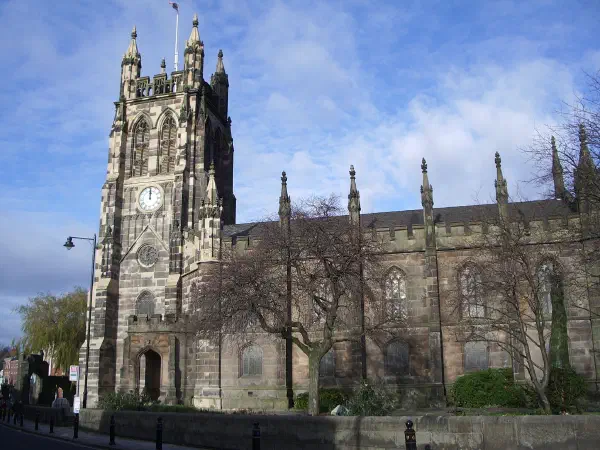 Golden hour
Shooting the whole area? Read the Stockport photography guide — every spot, the light that suits it, and a route to link them.