 Golden hour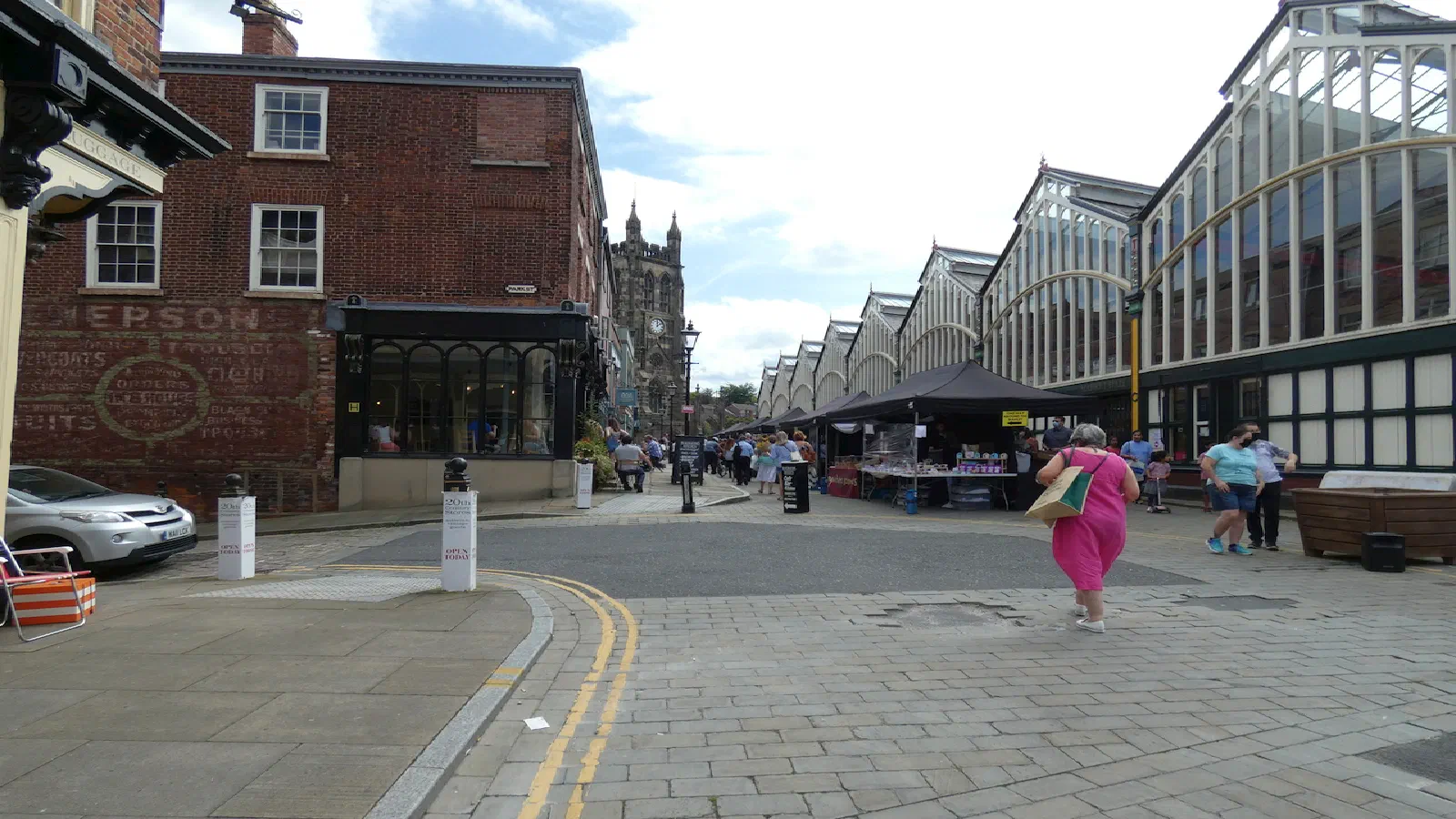
Best at golden hour
Stockport Market Place
Stockport · ManchesterSome gear links on this page are affiliate links — if you buy through them we may earn a small commission at no extra cost to you. See our affiliate disclosure.
What is Stockport Market Place?
Stockport Market Place is the historic heart of Stockport town centre. It features a beautiful Victorian Market Hall, cobbled streets, and a variety of independent shops and cafes. The area has a distinct character that feels a world away from the modern developments of the city centre.
Why Shoot Here?
- Victorian Architecture: The Market Hall is a stunning example of Victorian glass and ironwork architecture, both inside and out.
- Cobbled Streets: The surrounding streets, like Underbank, offer charming perspectives with their historic buildings and narrow alleys.
- Street Photography: The market is a hub of local life, perfect for capturing candid moments and the vibrant atmosphere of a traditional English market.
- Staircase Views: The area’s varying elevations provide interesting viewpoints and staircases that add depth and character to your photos.
Getting There
There is no tram to Stockport. Stockport rail station is the arrival point, roughly 10–15 minutes on foot and uphill through the town centre to the Market Place, with regular trains from Manchester Piccadilly taking about ten minutes. Drivers have NCP Stockport or the Merseyway Shopping Centre car park at roughly £4–8 per day — noticeably cheaper than city-centre parking.
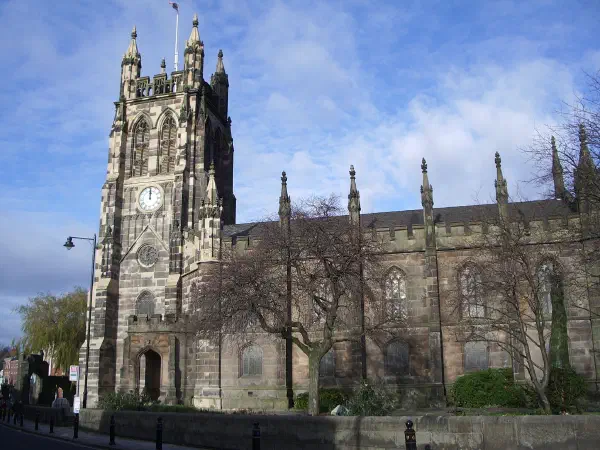
The Market Place is a public square, open at all times. The Market Hall itself is open on market days, which is the constraint that decides when to come: the Victorian glass-and-ironwork interior is the main subject here and you cannot photograph it on a day the hall is shut. The area sits on raised ground in Stockport old town, reached by several historic staircases, with St Mary’s Church above and Stockport Viaduct ten minutes down the hill — the Stockport old town and viaduct walk connects all three.
Photography FAQ
Can you take photos in Stockport Market Place?
The square and the surrounding streets are public and need no permission. The Market Hall is a working market: photographing the architecture is fine, but the stalls are people’s businesses, so ask a stallholder before photographing them or their display close up. Most are happy to be asked and some will pose, which is usually a worse picture than the one you were about to take — ask, then wait for them to get back to work.
When is the market on?
Trading days are Tuesday, Friday and Saturday, with stallholders setting up from about 8:30am and trading through to mid-afternoon. The setup period is the richest time to be there: boxes coming off vans, produce being arranged, awnings going up, and vendors accessible before the lunchtime queues. If you want the empty architecture instead, come before 8am on a non-market day when the square and the Underbank alleys are deserted.
What is the best light for the Market Hall interior?
Overcast. The Victorian glass roof is the whole point of the interior, and in direct sun the glazed sections blow out while the ironwork below drops into deep shadow — a contrast range nothing will hold. Cloud diffuses the light through the glass and lights the interior evenly, so the glass glows without clipping and the dark ironwork reads as structural pattern. Point a 14–24mm straight up from the centre of the hall.
What else is worth shooting nearby?
Underbank, the narrow curving cobbled street below the Market Place, lined with historic buildings on both sides. Shoot from one end at 35–50mm using the setts and the row of Victorian shopfronts as converging lines; the curve hides the far end, which gives you depth without a flat vanishing point. Late afternoon on a clear day gives you a 30–45 minute window when low sun reaches into those passages.
What makes Stockport Market Place distinctive?
The topography. The Market Place sits on raised ground reached by historic staircases, so the town stacks vertically in a way that nothing in central Manchester does — shoot up a staircase from the lower pavement at 16–24mm and you get layered buildings receding at several different levels in one frame. Combined with the cobbles and the Victorian market hall, it reads as somewhere genuinely older than the city down the line.
Best Times to Shoot
- Market mornings — Tuesday, Friday, Saturday (from 8:30 am) — Stallholders are setting up by 8:30 am and trading runs through to mid-afternoon. The early morning setup period is particularly rich for photography: boxes being unpacked, produce arranged, awnings raised. Colour, movement, and the vendors themselves are all more accessible before lunchtime queues form.
- Overcast days inside the Market Hall — The Victorian glass roof of Stockport Market Hall is the key interior element. In direct sun, the glazed sections produce overexposed patches and the ironwork beneath falls in deep shadow. Cloud cover diffuses the light through the glass and gives an even, flattering illumination across the full interior — ideal for a 16–24 mm wide-angle shot looking upward.
- Late afternoon golden hour — The Underbank area adjacent to the Market Place has narrow cobbled streets with buildings close on both sides. Late afternoon sun reaches these passages at a low angle, warming the Victorian ironwork and the stone setts of the street surface. This is a 30–45 minute window that only applies on clear days.
- Early mornings before market opening — The Market Place and the Underbank alleys below St Mary’s Church are empty before 8 am on non-market days. Empty cobbled streets, no vehicles, and the full facade of the Market Hall visible without obstruction. Good conditions for clean architectural work on the Victorian frontages.
Composition Ideas
- Upward through the Market Hall ironwork — Stand at the centre of the Victorian Market Hall interior and aim an ultra-wide like the 14–24 mm directly upward. The cast-iron roof trusses, decorative brackets, and glass panels create a geometric grid overhead; in diffused daylight the glass glows without blowing out, and the dark ironwork is legible as structural pattern.
- Underbank cobbled street leading lines — Underbank is a narrow, slightly curving street below the Market Place with historic buildings lining both sides. Shoot from one end with a 35–50 mm lens and use the cobble-stone surface and the row of Victorian shopfronts as converging lines. The curve of Underbank means the far end is partially hidden, adding depth without a simple straight-line vanishing point.
- Stallholder candid portraits — Use a 50–85 mm lens on market days to photograph individual vendors engaged in their work — arranging fruit, wrapping fish, exchanging change. Work from a respectful distance and include enough of the stall context that the image locates the subject in the market rather than extracting them from it.
- Staircase elevation from low angle — The Market Place sits on a raised area accessible by several historic staircases including the one connecting to St Mary’s Church above. Shoot from the lower pavement level pointing up the stairs with a 16–24 mm lens; the elevation changes and the layered buildings of the town centre visible beyond the staircase create a complex, multi-level composition unique to Stockport’s topography.
How to shoot it
Lens
A 35mm or 50mm prime is ideal — small, fast and unobtrusive for candid frames and shopfront detail.
Settings
Shutter priority at 1/250s or faster to freeze movement, with Auto ISO so you can keep shooting as the light shifts.
Composition
Work the light and shadow, look for layers and gesture, and let strong shopfront colour or signage carry the frame.
Timing
Aim for golden hour — the hour after sunrise or before sunset — when low, warm light rakes across the scene. Today's exact window is in the panel on this page.
More in Stockport
See the area →Nearby spots
Golden hour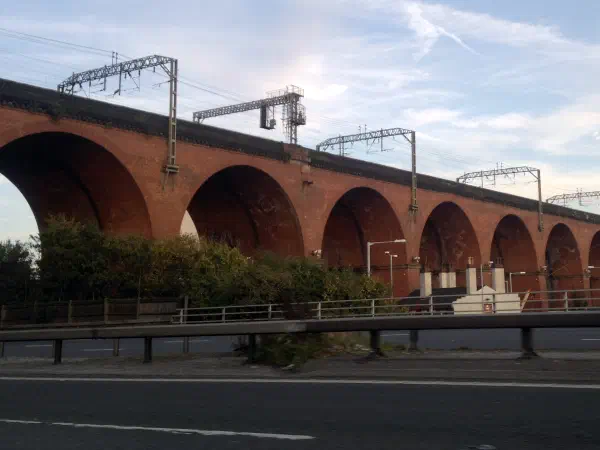 Blue hour
Shooting the whole area? Read the Stockport photography guide — every spot, the light that suits it, and a route to link them.