 Golden hour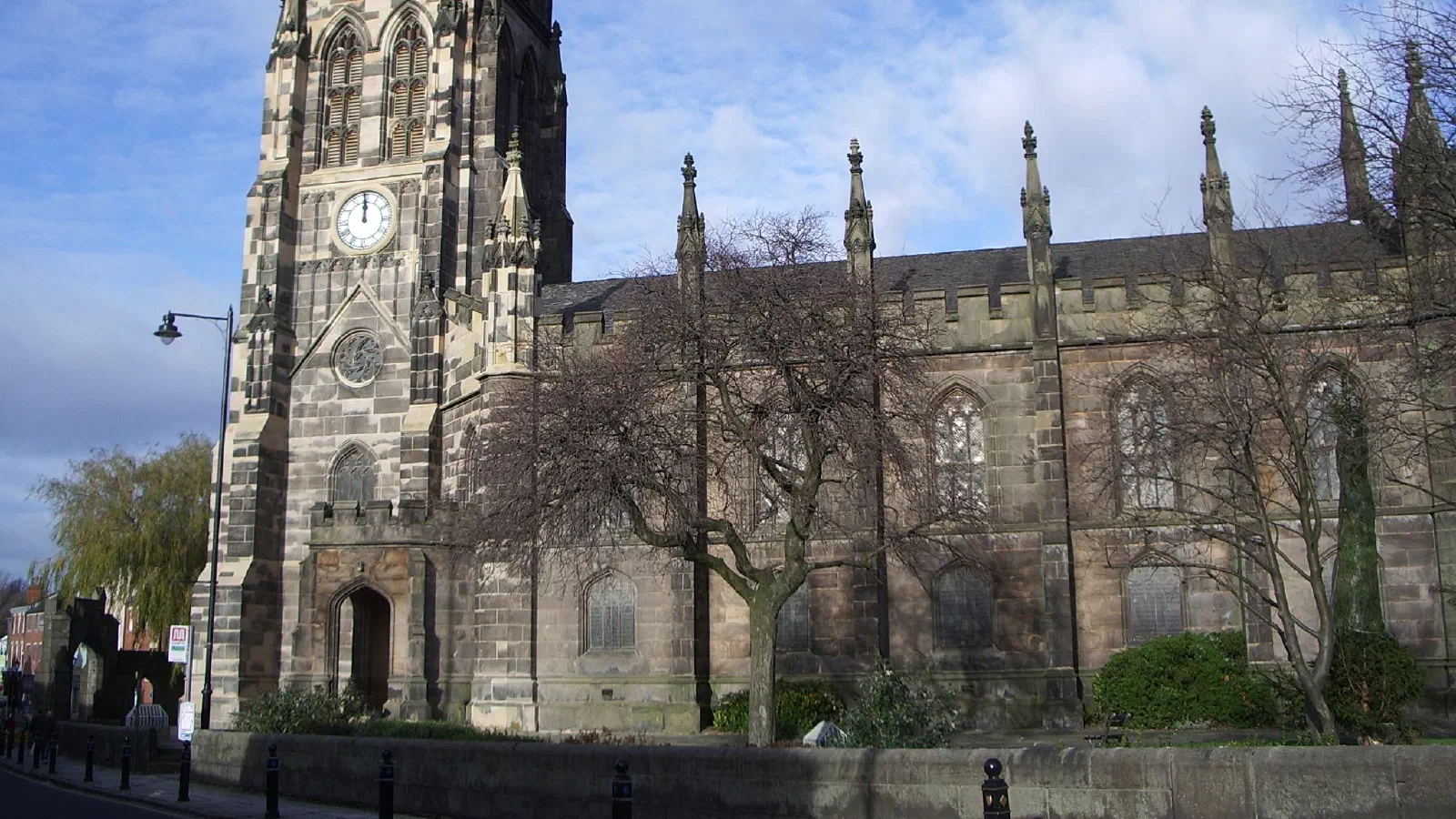
Best at golden hour
St Mary’s Church & Staircase
Stockport · ManchesterSome gear links on this page are affiliate links — if you buy through them we may earn a small commission at no extra cost to you. See our affiliate disclosure.
What is St Mary’s Church?
St Mary’s Church is a Grade I listed parish church that has stood on this site for centuries. The current building, largely rebuilt in the early 19th century, sits on a high ridge overlooking the Stockport Market Place, connected by a dramatic set of historic stairs.
Why Shoot Here?
- Gothic Architecture: The church features beautiful Gothic Revival details, including its tall spire and intricate stonework.
- Dramatic Staircase: The steep stone stairs leading from the Market Place up to the churchyard provide a great sense of scale and history.
- Panoramic Views: From the churchyard, you can enjoy elevated views across the Stockport skyline and towards the Stockport Viaduct.
- Peaceful Atmosphere: The churchyard offers a quiet, contemplative space for photography, away from the bustle of the market below.
Getting There
There is no tram to Stockport. Stockport rail station is roughly 15 minutes on foot and uphill, with regular trains from Manchester Piccadilly taking about ten minutes. Drivers have NCP Stockport or the Merseyway Shopping Centre car park at around £4–8 per day. Be ready for the climb — the church sits on a high ridge and the approach from the town is genuinely steep.
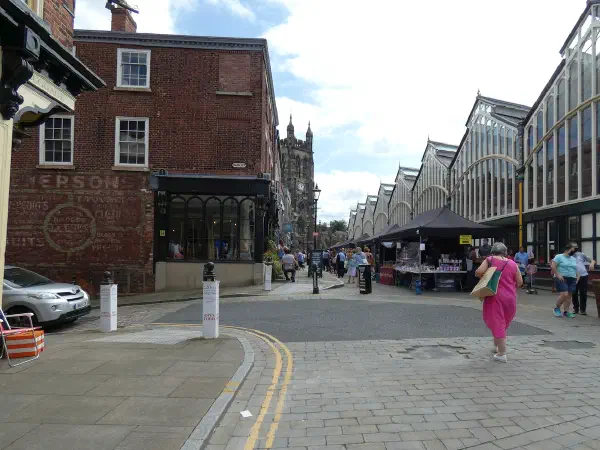
The churchyard and the staircase are publicly accessible. The staircase up from Stockport Market Place is both the way in and one of the main subjects, so walk it rather than driving round to the top. Stockport Viaduct is visible from the churchyard and about ten minutes away downhill, in Stockport — the Stockport old town and viaduct walk starts here and finishes there.
Photography FAQ
Can you take photos at St Mary’s Church?
The churchyard and the stairs are publicly accessible and photographing them needs no permission. It is an active Grade I listed parish church, though, so the interior is a different matter — check with the parish rather than assuming, and never photograph during a service, a funeral or a wedding. The churchyard is also a burial ground; work quietly and stay off the graves.
What is the best time to shoot here?
Late afternoon golden hour. The church sits on the west-facing side of the ridge, so from roughly 14:30 in winter to 18:00 in summer the sandstone goes from grey to warm gold, and the elevated position means nothing blocks the light. Overcast is better for the Gothic detail: flat light fills the carved tracery, where direct sun leaves half of it unreadably black. Quiet weekday mornings give you the staircase and churchyard empty, with low eastern light raking the steps.
How do you photograph the staircase?
From the bottom, at Stockport Market Place level, with a 16–24mm aimed up the steps. The stone balustrade narrows to a vanishing point, the spire appears beyond the landing, and the uneven steps give you textural foreground. It works best in late morning, when the staircase itself is in shade and the sky above it is bright — the contrast is what makes the climb read as dramatic rather than merely steep.
What can you see from the churchyard?
Stockport Viaduct to the south-west, across the lower town, which is the reason to come up at blue hour as well as in daylight. A 70–200mm compresses the distance and sets the viaduct’s 22 arches clearly against the sky with the churchyard wall or vegetation anchoring the foreground. At blue hour the viaduct is lit, giving you a medieval church foreground and Victorian railway engineering behind, from one elevated position.
What lens should I bring?
A 16–24mm for the staircase looking up and for the archway at the top. A 35–50mm for shooting through that archway toward the spire, where the arch gives natural vignetting and a sense of arrival. An 85–100mm for the Gothic tracery close up — Stockport’s sandstone has weathered into a rough surface around the incised carving, and raking late-afternoon light makes that relief dramatic. And a 70–200mm for the viaduct view.
Best Times to Shoot
- Late afternoon (golden hour) — The stone of St Mary’s and the historic staircase warming in low autumn sun is the classic shot. The church sits on the west-facing side of the ridge, and from approximately 14:30 in winter to 18:00 in summer, the stonework goes from grey to warm gold. The elevated position means the sun is unobstructed and the light is clean rather than filtered through surrounding buildings.
- Overcast days for Gothic detail — The carved Gothic tracery and the weathered sandstone around the windows and door surrounds are best revealed in flat, even light that eliminates shadow from within the carved recesses. Direct sun makes half the tracery unreadably dark. Cloud cover lets a 50–100 mm lens capture the full relief and surface texture of the stonework.
- Quiet weekday mornings — Before the Stockport Market Place below becomes active on Tuesday, Friday, and Saturday, the staircase and churchyard are peaceful and often empty. Morning light from the east illuminates the staircase handrails and steps from a low angle, creating texture and shadow that defines the stone surface.
- Blue hour from the churchyard — The Stockport Viaduct is visible from the churchyard to the south-west, and it illuminates at night. At blue hour, you can compose with the churchyard in the foreground and the lit viaduct arches in the background — an unusual pairing of medieval church and Victorian railway engineering from a single elevated viewpoint.
Composition Ideas
- Looking up the staircase from the Market Place — Stand at the foot of the steep stone staircase at Stockport Market Place level and aim a 16–24 mm wide-angle up the steps. The stone balustrade narrows to a vanishing point at the top, the church spire is visible beyond the landing, and the steps’ uneven surface provides textural foreground. This composition works best in late morning when the staircase is in shade and the sky above is bright.
- Church spire through the top archway — At the top of the staircase, an archway framed in dressed stone opens to the churchyard. Shoot through the arch with a 35–50 mm lens toward the church spire behind. The arch provides natural vignetting and a sense of arrival; the framing separates the spire from the sky clearly.
- Panoramic view toward the Stockport Viaduct — From the churchyard’s south-facing edge, look across the lower town toward Stockport Viaduct in the distance. A telephoto like the 70–200 mm zoom compresses the distance and places the viaduct’s 22 arches clearly within the frame against the sky, with some of the churchyard’s boundary wall or vegetation as foreground anchoring.
- Gothic tracery close-up — Move in close to the church’s window surrounds or doorway with a 85–100 mm lens at f/4–f/5.6. The carved Gothic details in Stockport’s sandstone have weathered distinctively, creating a rough-textured surface around the incised lines of the tracery. In late-afternoon raking light, this relief reads dramatically.
How to shoot it
Lens
A 16–35mm wide exaggerates scale and verticals; a 24–70mm keeps proportions natural. A tilt-shift tames converging lines.
Settings
f/8–f/11 for front-to-back sharpness, ISO 100, and meter for the highlights so detail in the stonework holds.
Composition
Hunt for symmetry and repetition, keep verticals straight, and use doorways or arches to frame the subject.
Timing
Aim for golden hour — the hour after sunrise or before sunset — when low, warm light rakes across the scene. Today's exact window is in the panel on this page.
More in Stockport
See the area →Nearby spots
Golden hour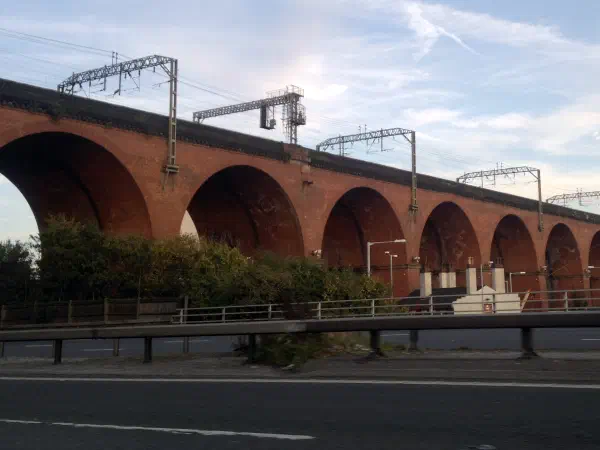 Blue hour
Shooting the whole area? Read the Stockport photography guide — every spot, the light that suits it, and a route to link them.