 Golden hour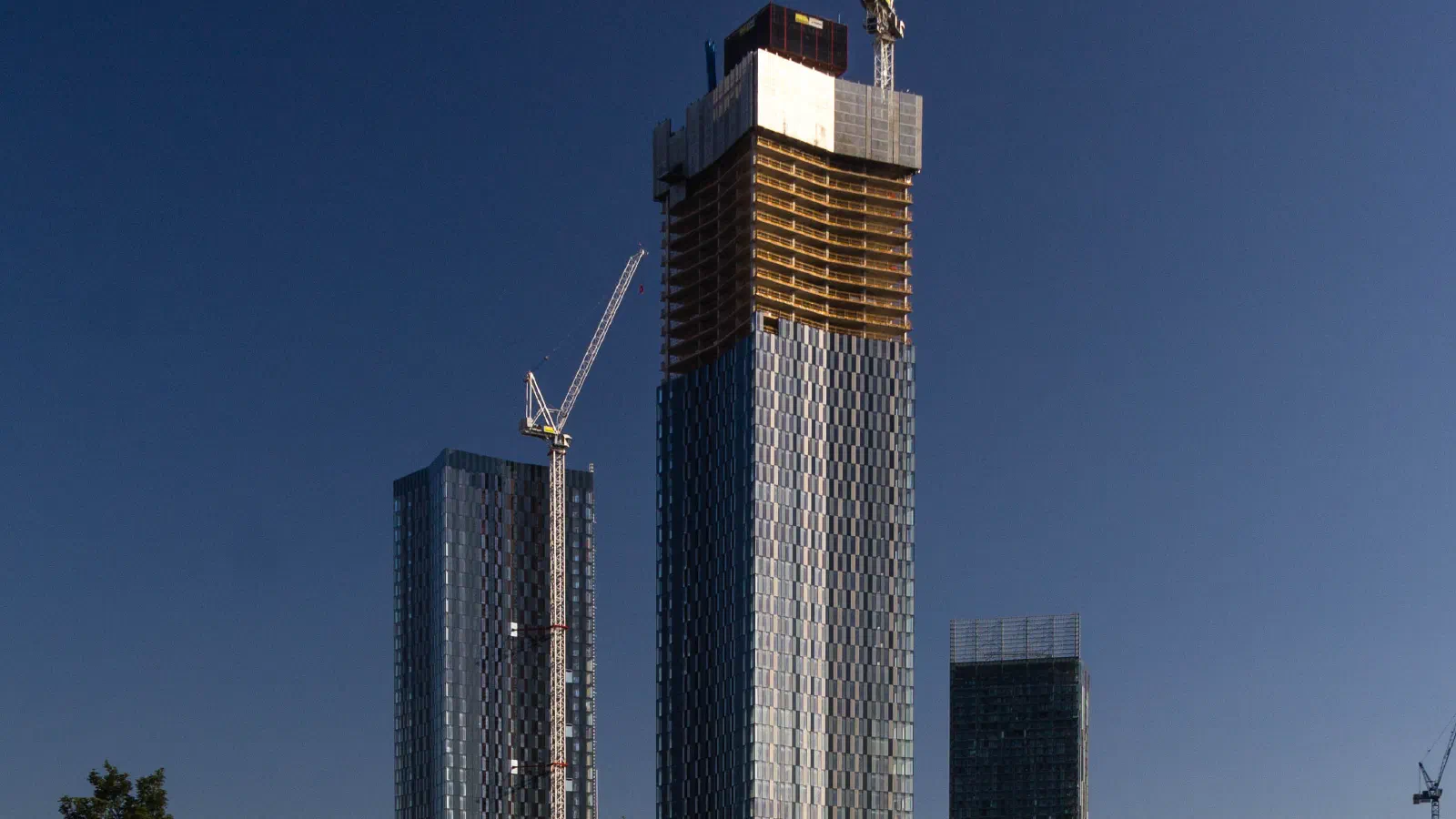
Best at blue hour
New Jackson (Deansgate Square)
New Jackson · ManchesterSome gear links on this page are affiliate links — if you buy through them we may earn a small commission at no extra cost to you. See our affiliate disclosure.
What is New Jackson?
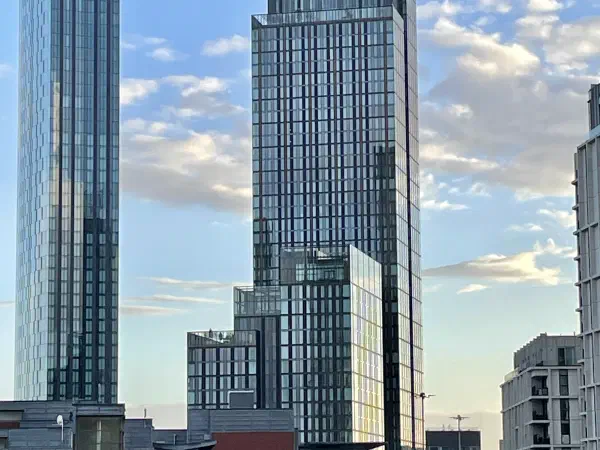
New Jackson (formerly known as Great Jackson Street) is a burgeoning skyscraper district at the southern end of Deansgate. It is dominated by the Deansgate Square towers, which include the South Tower—currently the tallest building in the UK outside of London. The area features sleek glass facades, modern public squares, and a distinct futuristic feel.
Why Shoot Here?
- Scale and Height: The sheer height of the towers is awe-inspiring. Use a wide-angle lens to capture them from the ground looking up.
- Glass Reflections: The glass exteriors of the buildings reflect the clouds and the changing light of the day, creating dynamic patterns.
- Modern Public Realm: The squares and walkways around the base of the towers are beautifully designed with modern street furniture and lighting.
- Sunset Shots: The towers catch the late afternoon light beautifully, glowing orange and gold as the sun sets over the city.
Getting There
Deansgate-Castlefield Metrolink is a three-minute walk and Deansgate rail station adjoins it. NCP Great Northern is the nearest car park at roughly £8–12 per day. The district sits at the southern end of Deansgate — you will not need directions, since the Deansgate Square towers are visible from most of the city centre and you simply walk toward them.
The public realm around the towers, principally Owen Street and Dawson Street, is open access at any hour and free. The towers themselves are residential, so this is a ground-level shoot. Castlefield Canals and Castlefield Urban Heritage Park are five minutes south and give you the best contextual view back toward New Jackson; Deansgate Locks is closer still.
Photography FAQ
Can you photograph the Deansgate Square towers?
Yes. The public realm at the base is open access with no restriction on photography or tripods. The towers are residential buildings, so the courtesy is to shoot the architecture rather than into individual apartments — a telephoto trained on a balcony is a different act from a telephoto trained on a facade. Ground-floor lobbies are private.
How do you photograph something that tall?
Two approaches, both of which work better than trying to fit a tower in from across the street. Stand between the towers on Owen Street and aim a 14–20mm straight up: the four towers converge at a vanishing point overhead and the South Tower’s 201 metres is only really legible from that angle. Or step well back and put a person on the pavement in the foreground at 35–50mm — the towers are so large they read as abstract without a human scale reference.
What is the best time to shoot New Jackson?
Sunset, because the towers face west and the glass curtain walls go amber-orange in the last half hour of daylight — shoot from the east side, on Owen Street or the public realm, facing into the light. Blue hour is next: the residential floors light up from within as people come home, and the lobby lighting adds warm pools at ground level. Both need a tripod for the 2–8 second exposures. Clear days with fast-moving cloud are the wildcard, since the reflections across the glass change every few seconds.
Where is the best wide view of the towers?
From the Castlefield Canals towpath, looking north. A 35–70mm from there frames the towers rising above the Victorian railway viaducts and the moored canal boats, which places Manchester’s current skyline directly in the industrial fabric that preceded it. It is a far more interesting photograph than the towers in isolation, and it is five minutes’ walk away.
What lens do I need?
A 14–20mm ultra-wide for the upward canyon shot and for the puddle reflections after rain, when the polished stone of the public realm forms mirror surfaces that double the tower height. A 35–70mm for the scale shots and the Castlefield context view. A 100–200mm for the reflection abstracts — telephoto compression stacks the reflected sky, cloud and neighbouring towers tightly in a single curtain-wall panel until the original building becomes secondary to its own surface.
Best Times to Shoot
- Sunset (west-facing facades) — The Deansgate Square towers face west, and the glass curtain walls turn brilliant amber-orange in the final 30 minutes before sunset. The South Tower — currently the UK’s tallest building outside London — is particularly dramatic when fully lit from the west; shoot from the east side of the towers on Owen Street or the public realm to face into this light.
- Blue hour (20–40 minutes after sunset) — The residential towers illuminate from within as occupants return home, and the lobby lighting at ground level adds warm pools to the otherwise glass-and-aluminium palette. This is the window for blue-hour tower compositions against a still-deep sky; a tripod like the Peak Design Travel Tripod is essential for the 2–8 second exposures needed.
- Clear days with scattered cloud — Fast-moving cloud reflects dynamically across the large glass surfaces of the Deansgate Square towers. The reflections change every few seconds as cloud masses cross the facade. A 70–200 mm telephoto from a distance allows you to isolate specific cloud patterns reflected in individual curtain-wall panels.
- After heavy rain — The Owen Street and Dawson Street public realm uses polished stone and smooth concrete that forms mirror-like puddle surfaces after rain. These puddle reflections double the height of the towers and create abstract, near-symmetrical compositions at ground level.
Composition Ideas
- Straight-up canyon shot from below — Stand between the towers on Owen Street and aim a 14–20 mm ultra-wide directly upward. The four Deansgate Square towers converge at the vanishing point above, creating an extreme converging-vertical composition. The South Tower’s height — 201 metres — is most apparent from this angle.
- Street-level people for scale — The towers are so tall that they are difficult to read without a scale reference. Stand back from the base and include a person walking along the pavement in the foreground with the full tower height above. A 35–50 mm lens from across Owen Street captures both comfortably without compressing the tower disproportionately.
- Canal basin wide shot from Castlefield — Walk south to the Castlefield Canals and turn north to frame the New Jackson towers above the Victorian canal infrastructure. A 35–70 mm lens from the towpath captures the towers rising above the railway viaducts and canal boats, placing Manchester’s current skyline in its industrial heritage context.
- Glass reflection abstract — Use a 100–200 mm telephoto from a distance to isolate one section of a tower facade where neighbouring buildings, sky, or the opposite tower are reflected in the glass. Telephoto compression stacks the reflected elements tightly, producing an abstract image where the original building becomes secondary to its reflective surface.
How to shoot it
Lens
Reach for a 70–200mm to compress the towers and stack the skyline; a 24–70mm covers wider establishing frames.
Settings
Tripod, f/8–f/11, ISO 100 and exposures of 1–10s to balance lit windows against the sky.
Composition
Find a clean foreground or reflective surface, place the tallest tower off-centre on a third, and layer near and far elements.
Timing
Blue hour — the ~20 minutes after sunset — is the sweet spot: the sky balances with the city's lights. Be set up before it starts; today's window is on this page.
More in New Jackson
See the area →Nearby spots
Golden hour Blue hour