 Blue hour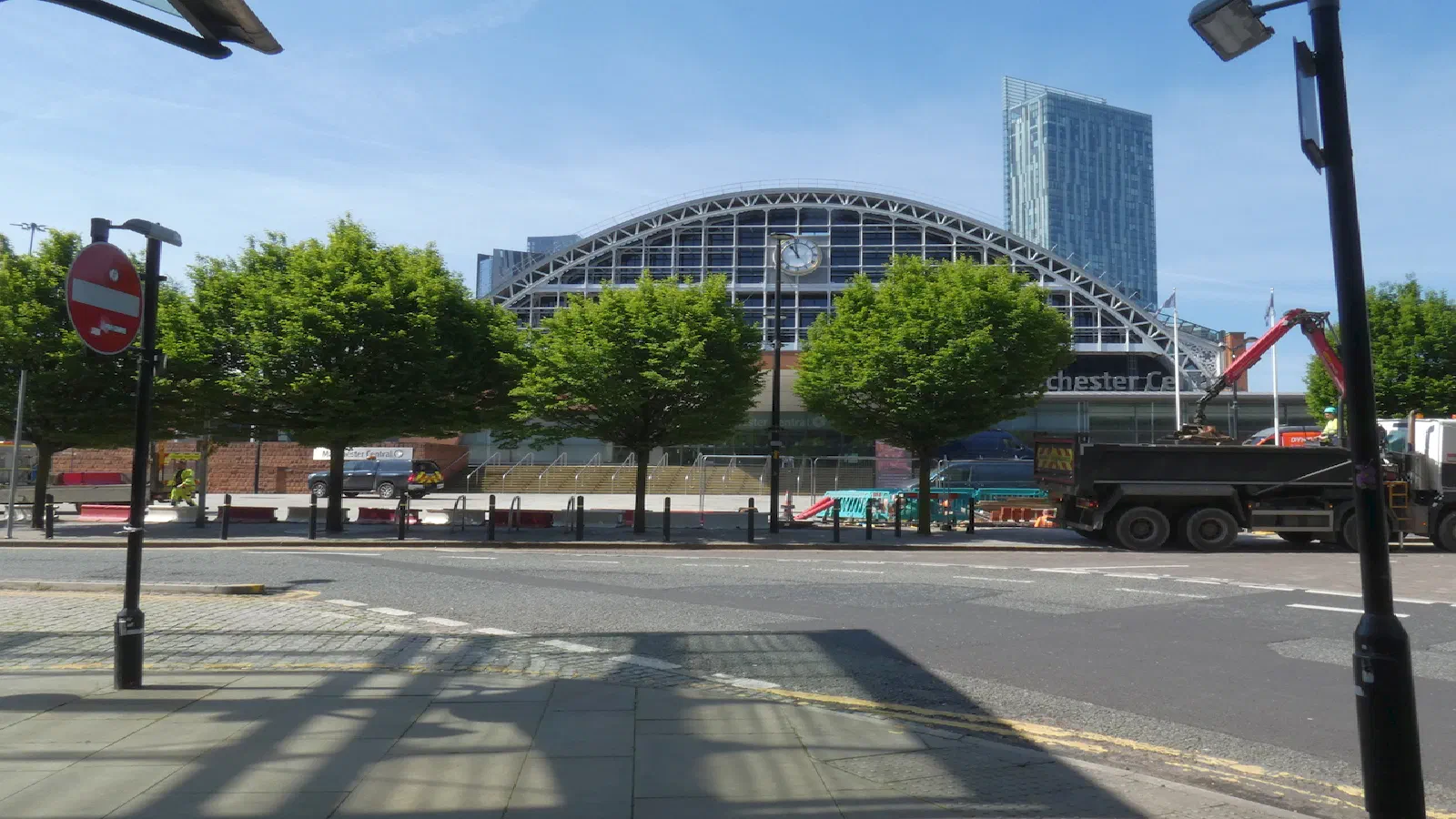
Best at golden hour
Manchester Central (Convention Centre)
Petersfield · ManchesterSome gear links on this page are affiliate links — if you buy through them we may earn a small commission at no extra cost to you. See our affiliate disclosure.
What is Manchester Central?
Manchester Central is an award-winning venue and former railway station (Manchester Central railway station). Its massive arched roof is one of the city’s most recognisable architectural features and is a testament to Manchester’s industrial and engineering heritage.
Why Shoot Here?
- Iron and Glass Architecture: The grand arched roof is a spectacular subject, especially when shot from a distance or from the nearby elevated walkways.
- Modern Additions: The modern glass entrance and foyer provide a sleek contrast to the historic Victorian ironwork of the main hall.
- City Landmark: It’s a key part of the Manchester skyline, and its scale makes it an impressive subject for urban landscape photography.
- Night Illumination: The building and its surroundings are often beautifully lit at night, emphasizing the structure’s massive scale and architectural detail.
Getting There
Deansgate-Castlefield and St Peter’s Square Metrolink stops are both about five minutes away. NCP Great Northern is the nearest car park at roughly £8–12 per day and sits directly opposite. The building fronts Windmill Street and Lower Mosley Street in Petersfield, and the barrel-vaulted roof is visible from a good distance in every direction.
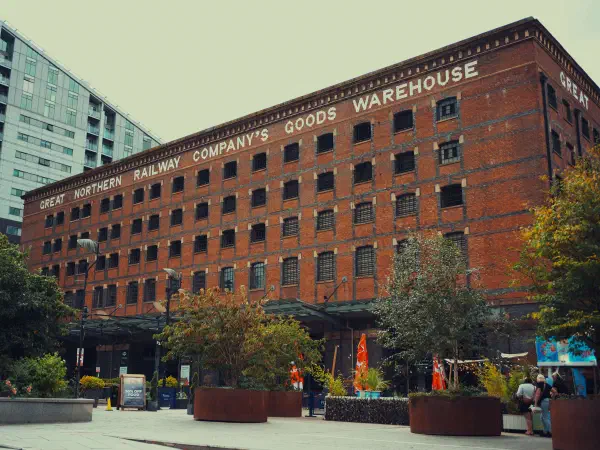
The exterior is publicly accessible at any time; interior access depends entirely on what is on. This is a working convention centre, so the enormous former train shed is only open when an exhibition or public event is running — and that is the only realistic way to photograph the 210-metre barrel vault from the floor. Check the venue’s event listings before planning an interior visit. Great Northern Warehouse is next door, with The Midland Hotel and St Peter’s Square five minutes east.
Photography FAQ
Can you photograph Manchester Central?
The exterior freely, from public pavement, at any hour — and that is where the best architectural frames are anyway. The interior is a hired event space, so photography inside depends on the event: some exhibitions welcome it, some are trade-only or restrict cameras entirely, and the venue’s own conditions apply on top. If the interior matters to you, check before you buy a ticket rather than after.
What is the best time to shoot the exterior?
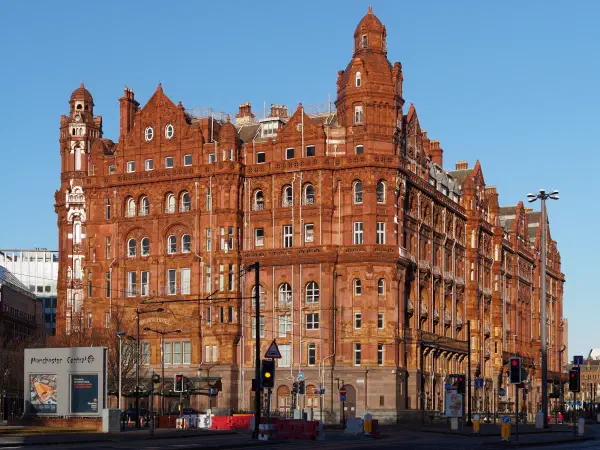
Blue hour, 20–40 minutes after sunset, when the exterior lighting comes up and outlines the arch against a sky still blue enough to separate it from the dark Victorian brick. Shoot from the lower end of Lower Mosley Street or the elevated walkway near the Great Northern Warehouse. Golden hour is the alternative: low western sun on the Windmill Street side warms the brick and picks out the clay tile and ironwork of the roof for about thirty minutes, most pronounced in autumn and winter.
Where do you stand to fit the whole arch in?
The pavement outside the Bridgewater Hall on Lower Mosley Street, at 24–35mm. From that distance the full curved roofline sits comfortably above the Victorian facade, and the Great Northern Warehouse comes into frame on the right to give architectural context. Closer in, at the corner of Lower Mosley Street and Windmill Street, the roof reads instead as a strong diagonal sweeping across the sky — run it corner to corner and let the curve do the composing.
How do you shoot the roof structure itself?
Under flat overcast light, whether you are inside or out. The barrel vault is iron and glass, and in direct sun the glazed sections blow out while the ironwork drops into shadow — a range nothing holds. Cloud balances the two and lets you expose for the whole structure at once. This is the single most useful piece of timing advice for the building, and it inverts the usual instinct to wait for a clear day.
What was the building originally?
Manchester Central railway station, whose train shed is the arched hall that survives. The scale is the story: the barrel vault spans 210 metres and was built to cover platforms, not to impress, which is why it reads as engineering rather than decoration. The modern glass entrance lobby on Lower Mosley Street sets up a direct dialogue with that Victorian ironwork — shoot from the lobby threshold at 35–50mm and you get both eras in one undistorted frame.
Best Times to Shoot
- Blue hour (20–40 minutes after sunset) — The exterior lighting on the barrel-vaulted roof activates at dusk, outlining the arch against the sky. Shoot from the lower end of Lower Mosley Street or from the elevated walkway near the Great Northern Warehouse to capture the full silhouette of the roof with the sky still blue enough to provide separation from the dark Victorian brickwork.
- Golden hour (late afternoon) — Low western sun hits the brickwork on the west-facing Windmill Street side, warming the red brick and revealing the texture of the arched roof’s clay tile and ironwork. The effect lasts about 30 minutes and is most pronounced in autumn and winter when the sun is lower in the sky.
- Overcast midday for roof detail — The barrel-vaulted iron and glass roof of Manchester Central is best captured under flat, diffused light that passes evenly through the glazing. In direct sun, the glass sections blow out in exposure while the ironwork falls in shadow; cloud cover balances the two, letting you expose for the full structure simultaneously.
- During public events or open days — Manchester Central’s interior is an enormous arched hall — the former train shed — that is difficult to access without an event booking. When the space is in use for exhibitions or public events, the interior becomes available and the scale of the 210-metre barrel vault can be photographed from the floor level.
Composition Ideas
- Full arch from the Bridgewater Hall side — Walk to the pavement outside the Bridgewater Hall on Lower Mosley Street and use a 24–35 mm lens to frame the full curved roofline above the Victorian brick facade. At this distance, the arch fits comfortably and the Great Northern Warehouse is visible to the right, providing architectural context.
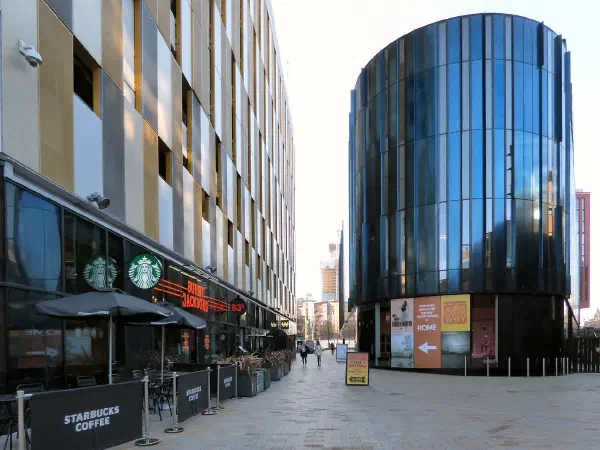
- Old and new at the glass entrance — The modern glass entrance lobby on the Lower Mosley Street side creates a direct dialogue with the original Victorian ironwork visible through the glass from outside. Shoot from the lobby threshold with a 35–50 mm lens so both the contemporary glass entrance and the heritage structure behind it appear in the same frame without distortion.
- Roof curve as diagonal leading line — Position yourself at the corner of Lower Mosley Street and Windmill Street, where the curved roof is visible as a strong diagonal sweeping across the sky. Use this curve as a compositional device — letting it run from the lower-left corner to the upper-right — against a complementary sky.
- Night long-exposure with light trails — Set a tripod like the Peak Design Travel Tripod on the pavement on Windmill Street facing the illuminated building and use a 10–20 second exposure to capture vehicle light trails on the road in the foreground. The arched roof glows from its uplighting and the trails add kinetic energy to what is otherwise a static architectural subject.
How to shoot it
Lens
A 16–35mm wide exaggerates scale and verticals; a 24–70mm keeps proportions natural. A tilt-shift tames converging lines.
Settings
f/8–f/11 for front-to-back sharpness, ISO 100, and meter for the highlights so detail in the stonework holds.
Composition
Hunt for symmetry and repetition, keep verticals straight, and use doorways or arches to frame the subject.
Timing
Aim for golden hour — the hour after sunrise or before sunset — when low, warm light rakes across the scene. Today's exact window is in the panel on this page.
More in Petersfield
See the area →