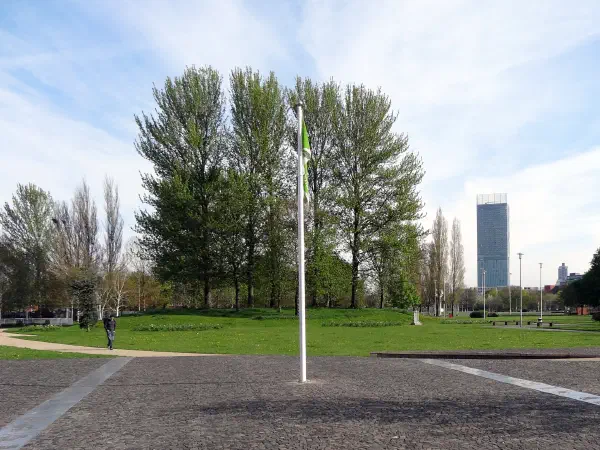
 Golden hour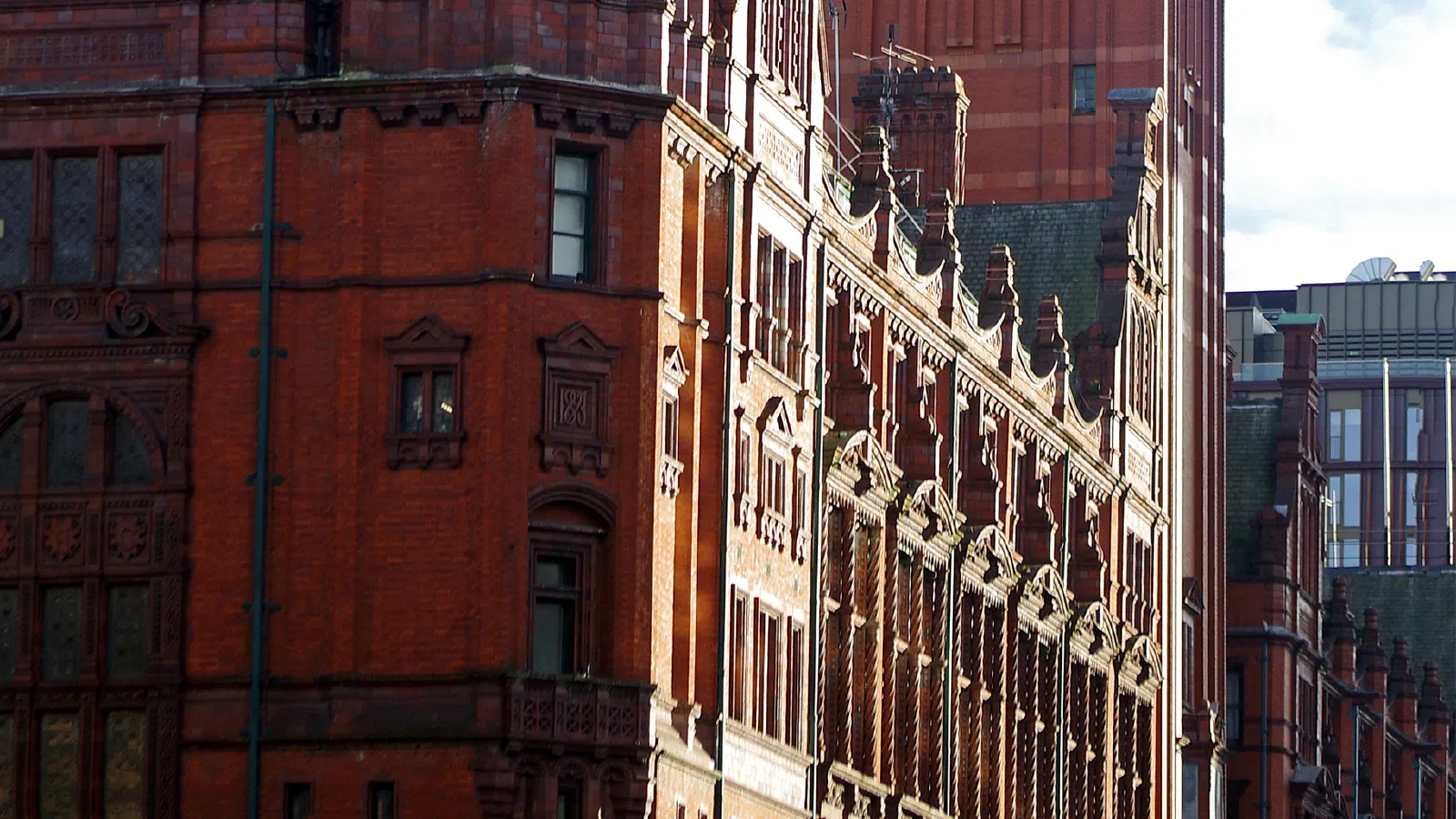
Best at blue hour
Kimpton Clocktower Hotel (The Refuge)
Hulme · ManchesterSome gear links on this page are affiliate links — if you buy through them we may earn a small commission at no extra cost to you. See our affiliate disclosure.
What is Kimpton Clocktower Hotel?
Formerly the Refuge Assurance Building, this Grade II* listed red brick and terracotta landmark is one of Manchester’s most iconic buildings. While it sits on the edge of the city centre and Hulme, its imposing presence and the “Refuge” bar inside make it a must-visit for photographers.
Why Shoot Here?
- Victorian Gothic Architecture: The exterior is a masterpiece of Victorian design, featuring a massive clock tower that can be seen from across the city.
- The Winter Garden: Inside, The Refuge features a stunning “Winter Garden” with a glass roof and indoor trees, providing a unique and lush interior setting.
- Industrial-Chic Interiors: The bar area combines original architectural features with modern design, perfect for lifestyle and architectural interior photography.
- Grand Scale: The sheer scale of the building’s hallways and public spaces offers numerous opportunities for dramatic, wide-angle shots.
Getting There
Manchester Oxford Road rail station is a two-minute walk, and St Peter’s Square Metrolink is about eight minutes north up Oxford Road. NCP First Street is the nearest car park at roughly £8–12 per day. The building sits on the corner of Oxford Street and Whitworth Street at the edge of the city centre and Hulme, with wide level pavement on the Oxford Road side — which is where you need to be to fit the clock tower in.
The exterior is public street and photographable at any hour. Inside, the Refuge bar and the Winter Garden are open to the public as a bar and restaurant rather than as an attraction, so plan on being a customer. Manchester Central is five minutes north-west and The Midland Hotel and St Peter’s Square about eight — a natural pairing, since both are terracotta landmarks from within a decade of each other.
Photography FAQ
Can you take photos inside the Kimpton Clocktower?
The Refuge bar and the Winter Garden are publicly accessible, and handheld photography as a customer is generally fine. Treat it as a working bar and restaurant, not a venue: keep other guests out of frame, don’t shoot across occupied tables, and buy something. A tripod is a different proposition and should be cleared with staff in advance rather than set up on spec — the Winter Garden in particular is a busy dining space. Quiet weekday afternoons are the realistic window for anything considered.
What is the Winter Garden and when should I shoot it?
It is the glass-roofed section of The Refuge, planted with indoor trees — the interior most people come here for. Shoot it between 12:00 and 14:00, when overhead sun pushes light down through the roof panels and lights the planting evenly from above instead of raking it from one side. Stand at one end and use a 16–24mm along the length: the linear perspective is strong and the glass panels above give you a geometric ceiling pattern framing the organic planting below.
Where do you stand to photograph the clock tower?
The far pavement on Oxford Road, with a 35–50mm to take in the full height above the terracotta facade. Including street-level activity — pedestrians, passing traffic — gives the scale something to measure against. The tower faces roughly south along Oxford Road, so it catches warm light from about 14:00 on a clear day, and at blue hour the illuminated tower reads hard against the sky with the bar lighting warming the street below.
What lens do I need here?
Two, ideally. A 16–24mm for the interiors: the Winter Garden, and the long ornate corridors with their plasterwork and original tiling, which give you convergent leading lines shot end to end. And a 50–85mm for the exterior terracotta, where the Refuge Assurance Company’s bespoke ornamental panels carry floral and geometric motifs that are invisible from a wide shot. Raking late-afternoon light is what makes that carving read three-dimensionally.
What was the building before it was a hotel?
The Refuge Assurance Building — the headquarters of the Refuge Assurance Company, a Grade II* listed red brick and terracotta landmark and one of the clearest statements of Victorian Gothic commercial confidence in Manchester. The scale of the public spaces and the density of the ornament both follow from that original purpose: it was built to project the solidity of an insurance company, which is why an ordinary corridor here has a decorative ceiling.
Best Times to Shoot
- Late afternoon (golden hour, facing south on Oxford Road) — The red brick and terracotta exterior faces roughly south along Oxford Road, catching warm afternoon light from about 14:00 onwards on a clear day. The clock tower — the building’s most distinctive feature — is lit on its south and west faces, revealing the ornate terracotta detailing and casting long shadows along the carved string courses.
- Midday for the Winter Garden interior — The glass-roofed garden section of The Refuge benefits from the overhead sun pushing light through the roof panels. Between 12:00 and 14:00, the indoor trees and planting are lit from above rather than from a harsh angle, giving an even, bright illumination that suits the lush interior aesthetic without deep shadows from the structural frame.
- Evening in the Refuge bar (from 18:00) — The bar area operates a designed warm-light scheme after dark. The combination of Edison-style bulb fixtures, dark timber, and Victorian tile creates pools of warm amber light against deeper shadows — ideal for moody interior and lifestyle photography. Busiest from 19:00 onwards on Friday and Saturday.
- Blue hour from the Oxford Road side — At blue hour, the illuminated clock tower punches against the deep blue sky, and the surrounding lower-level bar lighting gives warmth at street level. Shoot from across the road on Oxford Road to get the full facade with the clock tower as the vertical anchor of the composition.
Composition Ideas
- Full clock tower from Oxford Road — Cross to the far pavement on Oxford Road and use a 35–50 mm lens to frame the full height of the clock tower above the terracotta facade. Include street-level activity — pedestrians, a passing tram on the adjacent route — to give scale and urban context to the building’s Edwardian grandeur.
- Wide-angle Winter Garden — Stand at one end of the glass-roofed garden corridor and use a 16–24 mm lens like the Sigma 14–24mm f/2.8 to capture the full length of the indoor trees, planting, and glass ceiling. The linear perspective of the garden is strong, and the glass panels above provide a structural geometric pattern that frames the organic planting below.
- Grand corridor leading lines — The long, ornate hallways inside Kimpton Clocktower have high ceilings with decorative plasterwork, original tiling, and symmetrical lighting. Stand at one end and shoot toward a door or archway at the far end with a 24–35 mm lens; the ceiling, floor and wall details create convergent leading lines with a strong sense of depth.
- Victorian terracotta close-ups — Use a 50–85 mm lens on the exterior terracotta mouldings and carved panels above street level. The Refuge Assurance Company commissioned bespoke ornamental terracotta for this building; individual panels feature intricate floral and geometric motifs that reward close-up work, particularly in raking late-afternoon light that reveals their three-dimensional relief.
How to shoot it
Lens
A 16–35mm wide captures the full space; bring a fast prime (f/1.8) for the dim corners without a tripod.
Settings
Tripod where allowed, f/8 and low ISO; otherwise a fast prime wide open. Bracket exposures to hold both windows and shadows.
Composition
Centre on symmetry, get low for soaring ceilings, and let leading lines pull the eye down the room.
Timing
Blue hour — the ~20 minutes after sunset — is the sweet spot: the sky balances with the city's lights. Be set up before it starts; today's window is on this page.
More in Hulme
See the area →Nearby spots
Golden hour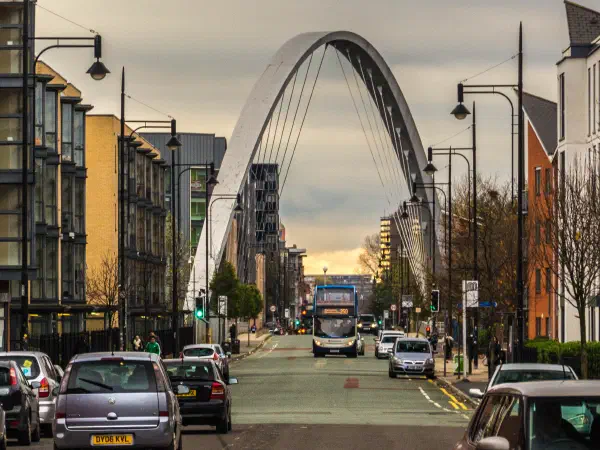 Night
Night