 Blue hour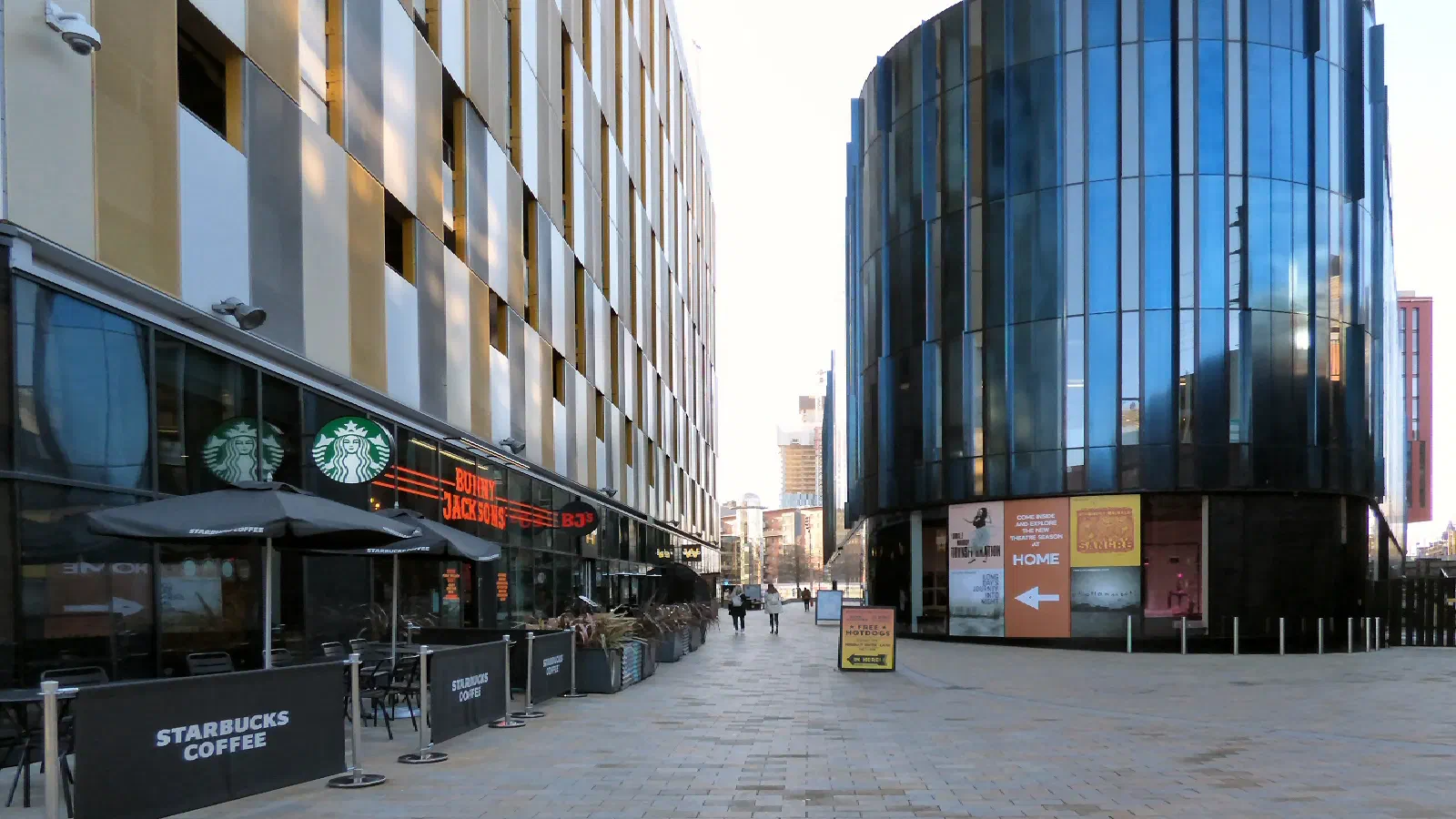
Best at blue hour
HOME Manchester
Petersfield · ManchesterSome gear links on this page are affiliate links — if you buy through them we may earn a small commission at no extra cost to you. See our affiliate disclosure.
What is HOME Manchester?
HOME Manchester is a remarkable arts centre located on First Street in Manchester city centre. Opened in May 2015, it was created through the merger of the Cornerhouse arts complex and the Library Theatre Company, forming a central venue for contemporary art, theatre, and film.
Housed in a distinctive triangular building designed by the Dutch architecture firm Mecanoo, HOME features an iridescent glazed façade with irregular fins, a welcoming central stairwell acting as a social spine, and a connected café-bar terrace that spills into the public square.
The venue includes:
- 2 theatres (a 500-seat main theatre and a 150-seat studio)
- 5 cinema screens
- Gallery space for visual arts
- Café-bar, restaurant, and public social areas It serves as a vibrant cultural hub commissioning and hosting international and local experimental work.
Why Shoot Here?
HOME Manchester is a compelling photography spot for several reasons:
- Striking architecture: The building’s bold triangular form and glowing façades make for dynamic exterior shots, especially during changeable light conditions.
- Inviting interiors: The central stairwell, with its warm wooden tones and integrated social spaces, offers fantastic opportunities for atmospheric interior and architectural capture.
- Creative ambiance: The mix of gallery installations, theatre staging, and lively public areas creates a layered, storytelling-rich environment.
Getting There
St Peter’s Square Metrolink is a five-minute walk and Manchester Oxford Road station about seven. NCP First Street is the nearest car park at roughly £8–12 per day, and sits beside the building. HOME is on First Street, on a public square that the café-bar terrace spills into — you can work the exterior from the plaza without entering.
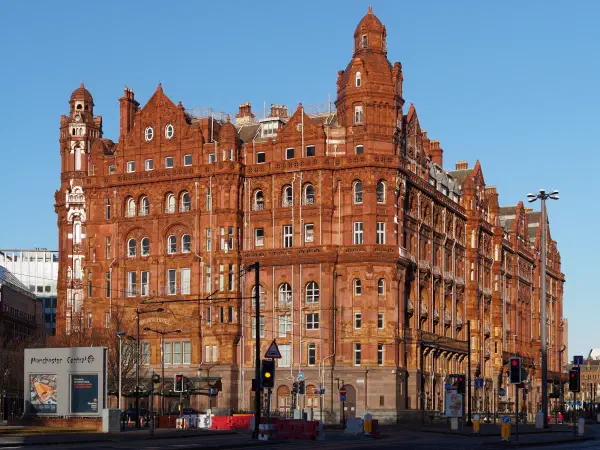
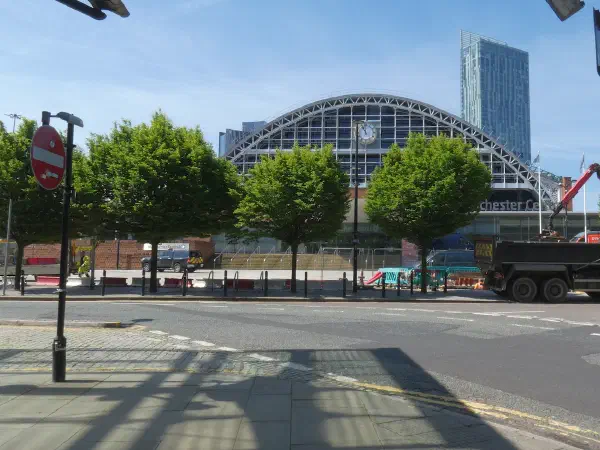
The exterior is accessible at any time; the interior is open during opening hours, which for a working arts centre means around performances, screenings and exhibitions rather than as a permanent open building. The galleries, café-bar and central stairwell are all publicly accessible during those hours without a ticket. Kimpton Clocktower is five minutes east, Manchester Central and The Midland Hotel about the same in Petersfield.
Photography FAQ
Can you take photos inside HOME?
The public areas — the central stairwell, the café-bar, the foyer spaces — are open during opening hours and handheld photography there is unremarkable. Galleries are more variable: individual exhibitions often carry their own photography restrictions set by the artists, so check the signage at the gallery entrance rather than assuming. Theatres and cinema screens are off-limits during performances. A tripod anywhere in the building should be cleared with staff first.
What is the best time to photograph HOME?
Dusk and blue hour for the exterior. The iridescent glazed facade takes on its most distinctive character as the interior lights come up against a dimming sky, and the angular triangular form reads hardest then. For the interior, weekday mornings around 10–11am, when the stairwell and galleries are quiet enough to shoot the warm wood tones and the social spaces without people in every frame. Overcast daylight is best for clean detail on the glass fins.
What makes the building worth photographing?
It is a Mecanoo design, opened in May 2015, and the distinctive elements are all geometric: a triangular plan, an iridescent glazed facade with irregular fins, and a central stairwell that acts as the building’s social spine. The fins are the detail worth chasing — a 70–200mm isolating a section of facade produces abstract patterns of light, colour and line where the building disappears and only the geometry remains.
What lens should I bring?
A 16–24mm to take the full angular silhouette from the First Street square, using the paved plaza as foreground. A 70–200mm for the facade abstracts. Something moderate, 35–50mm, for the stairwell — shot from the bottom or the top through the levels, it gives you depth, warm wood and the activity on each floor in one frame. Framing people within the building’s hard angles and window frames is the composition that works best inside.
What was here before?
HOME opened in 2015 as the merger of the Cornerhouse arts complex and the Library Theatre Company, bringing both into one purpose-built venue with two theatres, five cinema screens, gallery space and public social areas. That mixed programme is why the interior photographs well: it is a building designed to hold people between events, so the circulation spaces are generous and deliberately social rather than functional corridors.
Further Information
- Wikipedia – HOME (Manchester) — details on its creation, architecture, facilities, and cultural programming
- Mecanoo Project Overview – HOME Arts Centre — architectural design insights, layout, and context
- Manchester Animation Festival – Hosted at HOME — an example of its dynamic arts programming
Best Times to Shoot
- Dusk and blue hour: The iridescent glazed facade glows beautifully as interior lights switch on against a dimming sky, making the building’s angular form really stand out.
- Overcast daytime: Soft, even light reduces harsh reflections on the glass fins and lets you capture clean detail of the facade’s irregular geometry.
- Weekday mornings (10–11am): The interior spaces — especially the central stairwell and galleries — are quieter, giving you unobstructed shots of the warm wooden tones and social areas.
- During exhibitions or installations: Gallery lighting designed for artworks creates atmospheric pools of light that add drama to interior photographs.
Composition Ideas
- Shoot the triangular building from the First Street square: Step back to capture the full angular silhouette with a wide-angle lens (16–24mm) like the Sigma 14–24mm f/2.8 , using the paved plaza as foreground.
- Use the central stairwell for vertical compositions: Stand at the bottom or top and shoot through the staircase levels to emphasise depth, warm wood tones, and the social activity on each floor.
- Abstract facade details: Zoom in (70–200mm) on the irregular glass fins and iridescent panels to create abstract patterns of light, colour and geometric lines.
- Frame people within architectural lines: Photograph visitors on the staircase or in the cafe-bar terrace, using the building’s bold angles and window frames as natural borders.
How to shoot it
Lens
A 16–35mm wide exaggerates scale and verticals; a 24–70mm keeps proportions natural. A tilt-shift tames converging lines.
Settings
f/8–f/11 for front-to-back sharpness, ISO 100, and meter for the highlights so detail in the stonework holds.
Composition
Hunt for symmetry and repetition, keep verticals straight, and use doorways or arches to frame the subject.
Timing
Blue hour — the ~20 minutes after sunset — is the sweet spot: the sky balances with the city's lights. Be set up before it starts; today's window is on this page.
More in Petersfield
See the area →