 Any / overcast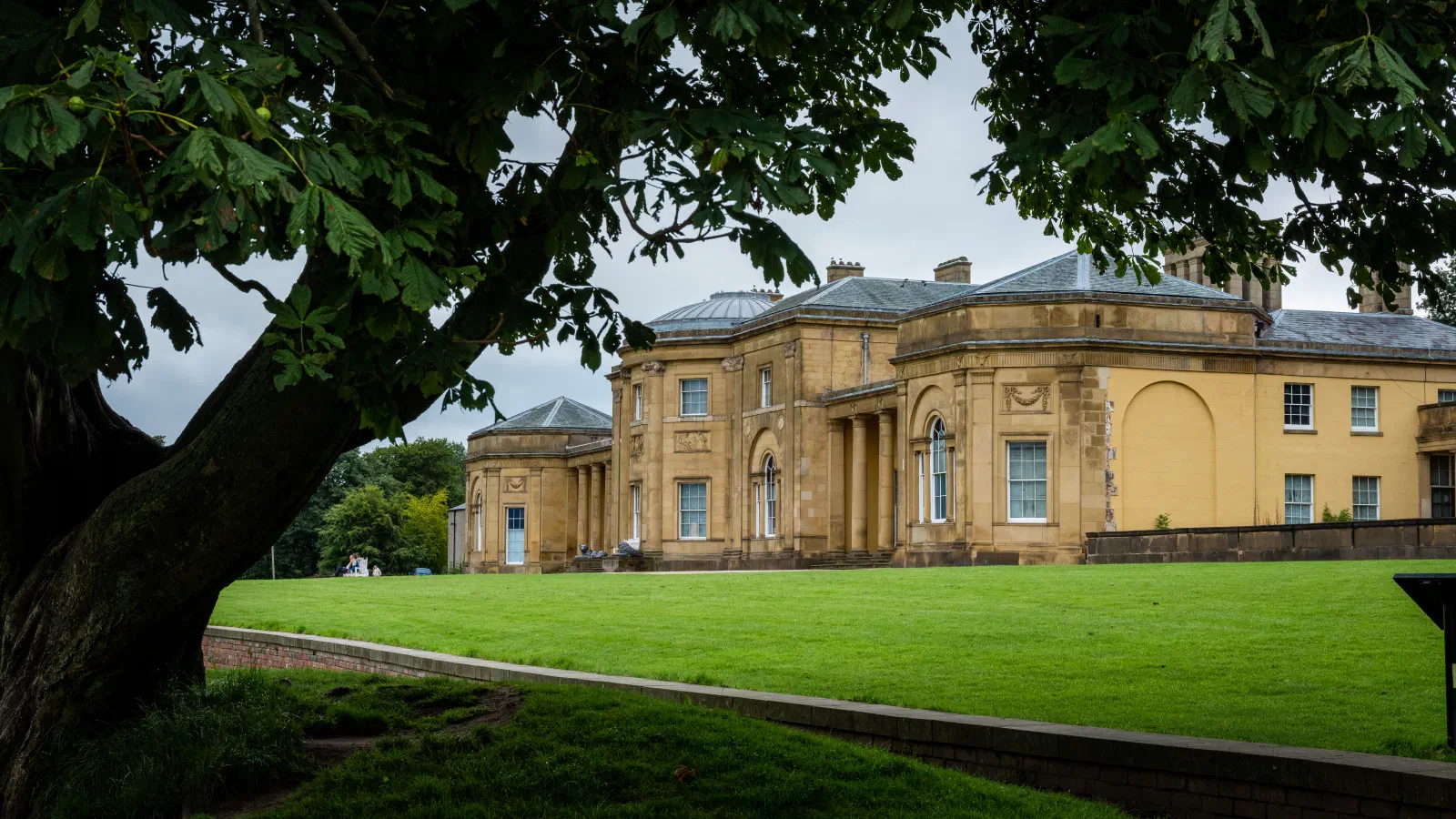
Best at golden hour
Heaton Park
North Manchester · ManchesterSome gear links on this page are affiliate links — if you buy through them we may earn a small commission at no extra cost to you. See our affiliate disclosure.
What is Heaton Park?
Heaton Park is Manchester’s largest park at over 600 acres, making it one of the biggest municipal parks in Europe. Located in north Manchester, the park is centred around the Grade I listed Heaton Hall, a neoclassical country house built in 1772 by architect James Wyatt. The park features a boating lake, formal gardens, ancient woodland, an animal centre, a golf course, and a restored tramway.
The park has been a public space since 1902, when it was purchased by Manchester Corporation. Its mix of open meadows, mature woodland, and ornamental features makes it a versatile location for photography throughout the year.
Why Shoot Here?
- Heaton Hall: The neoclassical facade with its Ionic columns and Portland stone is a striking subject, especially when framed by the surrounding parkland.
- The Boating Lake: Reflections of trees and sky on calm days — bring a polarising filter to cut glare or enhance cloud detail.
- Woodland Paths: The ancient woodland areas are perfect for atmospheric shots, particularly in autumn when the leaf canopy turns golden and orange.
- Wide Landscapes: The park’s rolling terrain and sheer scale allow for sweeping landscape compositions that are rare this close to a major city.
- The Colonnade and Temple: The Grade II listed Colonnade near the hall provides classical architectural framing opportunities.
Getting There
The Heaton Park Metrolink stop is at the park entrance, which makes this the easiest large landscape location in Greater Manchester to reach without a car — and it means you can arrive before the car park opens for a dawn shoot. Drivers have a free car park at the Middleton Road entrance. The park is in north Manchester; Blackley Forest is the other woodland spot in the same area.
At over 600 acres this is one of the largest municipal parks in Europe, so the practical planning problem is distance rather than access: Heaton Hall, the boating lake, the ancient woodland and the Colonnade are spread across the site and you will not cover them all casually. Access is open, though some areas close at night — worth checking if you are planning to stay past dusk.
Photography FAQ
Can you take photos in Heaton Park?
Yes. It is a public park with open access and no permission needed for personal photography or tripods. Commercial and wedding shoots need the council’s agreement. Heaton Hall is Grade I listed and its interior has limited public opening, so treat the hall as an exterior subject unless you have checked what is open. Around the animal centre and play areas, be visible about what you are doing.
What is the best time to photograph Heaton Hall?
Late afternoon golden hour. The hall faces roughly south-west and takes warm directional light from about 15:30 in autumn through to 19:00 in midsummer — the Ionic columns throw long shadows across the Portland stone steps and the pale stone goes a warm cream-gold. That is the single best window for the formal architectural shot. Weekday mornings are the alternative if you want the tree avenue to the hall without negotiating around other visitors.
When does mist form over the boating lake?
Cool autumn and winter dawns, particularly after a mild evening following a cold night. The lower ground near the lake collects it, and arriving at first light means the mist is still sitting on the water and the surface is mirror-still before any wind develops. The tram stop at the entrance is what makes this practical — you can be at the lake at dawn without waiting for a car park to open.
What lens do I need at Heaton Park?
A 35–50mm covers most of it: the tree avenue converging on the hall, the lake reflections with the waterline centred, and the low woodland-floor shots. A 50–85mm for the Colonnade, compressing the distance so one arch frames the hall’s entrance pediment behind it. A polariser is worth carrying for the lake — but keep checking through it, because over-polarising kills the reflection entirely, which is usually the reason you were there.
When is the park at its best?
October into early November. The woodland between the Middleton Road entrance and the boating lake turns red, amber and gold, leaf carpets build along the paths and give you rich foreground for wide shots, and floating leaves break up what would otherwise be flat lake reflections. Get low — 20–30cm — with the leaf carpet in the lower two-thirds and the trunks converging above, at f/2.8–f/4 so the far leaves soften while the near ones stay sharp.
Best Times to Shoot
- Late afternoon (golden hour) — Heaton Hall faces roughly south-west, so it catches warm directional light from about 15:30 in autumn through to 19:00 in midsummer. The Ionic columns cast long shadows across the Portland stone steps and the pale stone facade goes a warm cream-gold. This is the single best window for the formal hall photograph.
- Autumn (October–early November) — The woodland areas between the Middleton Road entrance and the boating lake turn vivid reds, ambers, and golds. Fallen leaf carpets build up along the paths during this period, providing rich foreground texture for wide shots, and the lake surface often carries floating leaves that break up flat reflections beautifully.
- Early morning in autumn and winter (at dawn) — The lower areas near the boating lake are prone to ground-level mist in cool weather, particularly after a mild evening following a cold night. Arriving at dawn means the mist is still sitting above the water, and the lake often holds mirror-still reflections before any wind develops. The tram stop at the park entrance means you can get there before the car park opens.
- Weekday mornings — On weekends, the park draws significant numbers of families, dog walkers, and joggers who appear in wide architectural compositions and limit tripod use on narrower paths. Weekday mornings — especially in term time — offer a much emptier park where the avenue of trees to the hall can be photographed without negotiating around other visitors.
Composition Ideas
- Tree avenue to Heaton Hall — The formal avenue of mature trees on the main approach from the Middleton Road entrance creates a natural double-file of leading lines converging on the hall facade. A 35–50 mm lens from the far end of the avenue places the colonnade and entrance steps dead-centre at a natural focal length; wider lenses exaggerate the curve of the branches overhead.
- Boating lake reflections — Walk to the north bank of the boating lake in still conditions. Use the lake surface to mirror either Heaton Hall across the water or the woodland canopy, placing the waterline at the centre of the frame for a symmetrical composition. A circular polariser like the NiSi True Color CPL cuts any surface glare but keep checking — over-polarising can make the reflection disappear entirely.
- Fallen leaf woodland floor — In October and November, get low — 20–30 cm above ground — with a 35–50 mm lens and place the leaf carpet in the lower two-thirds of the frame. The tree trunks above converge to a vanishing point in the upper third, and at f/2.8–f/4, the far end of the leaf carpet softens into bokeh while the near leaves are sharply detailed.
- The Colonnade as architectural frame — The Grade II listed Colonnade near the hall has a classical arch and colonnade structure that functions as a natural frame for the main hall behind it. Shoot from a position where one arch frames the hall’s entrance pediment, using 50–85 mm to compress the distance between colonnade and hall into a layered composition.
How to shoot it
Lens
A 24–70mm covers most scenes; a 70–200mm isolates detail and a macro lens finds the small stuff.
Settings
f/5.6–f/8 for natural depth, low ISO, and a polariser to cut glare and deepen foliage and sky.
Composition
Use paths and tree lines as leading lines, add foreground interest, and shoot into low side-light for depth and texture.
Timing
Aim for golden hour — the hour after sunrise or before sunset — when low, warm light rakes across the scene. Today's exact window is in the panel on this page.
More in North Manchester
See the area →Nearby spots
Any / overcast