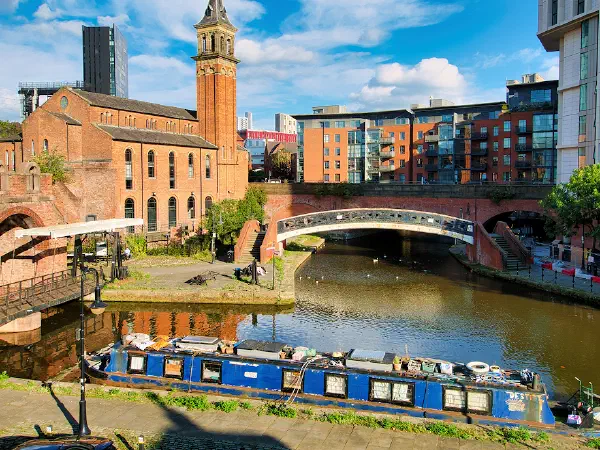
 Golden hour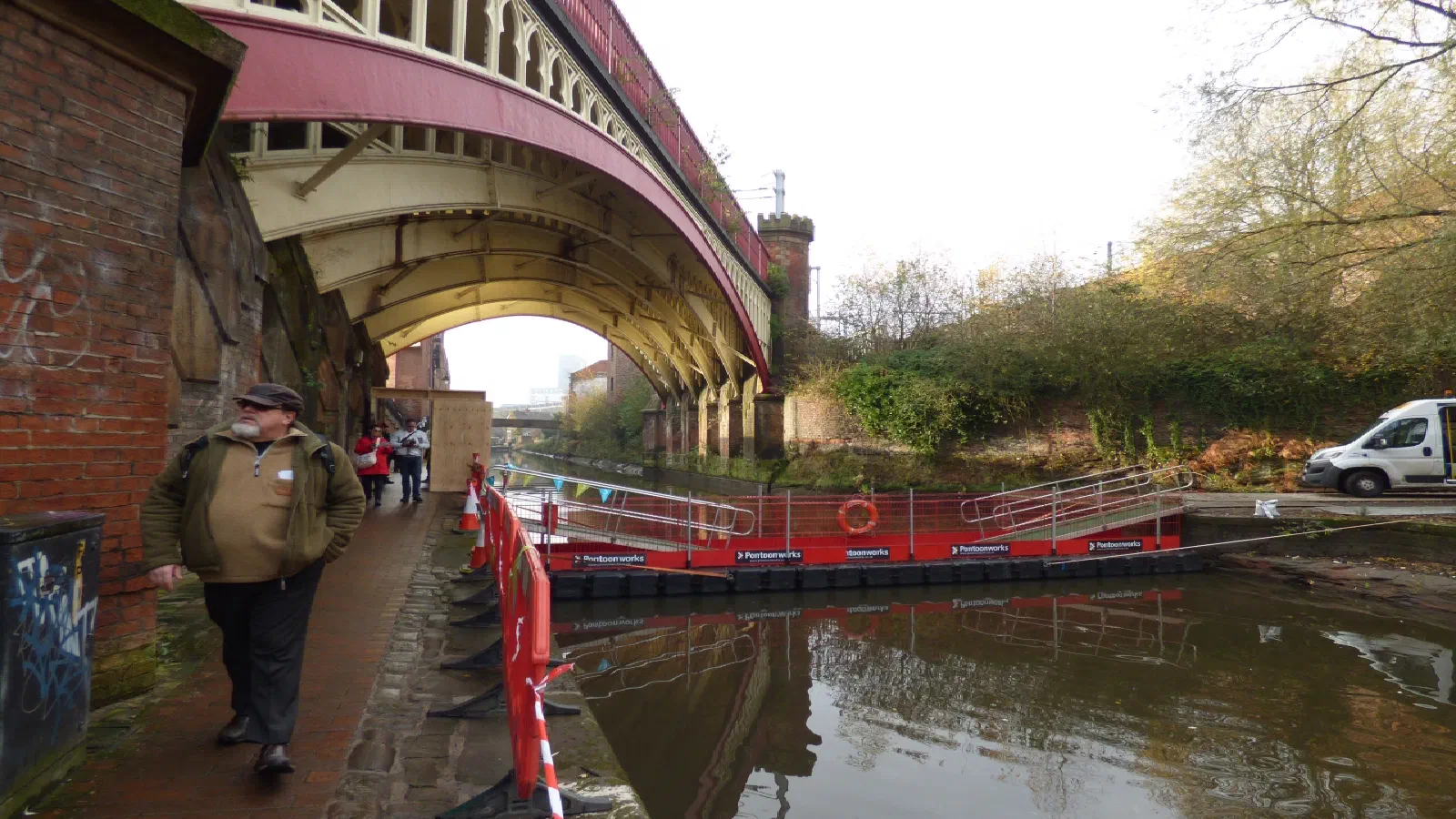
Best at blue hour
Deansgate Locks
Castlefield · ManchesterSome gear links on this page are affiliate links — if you buy through them we may earn a small commission at no extra cost to you. See our affiliate disclosure.
What is Deansgate Locks?
Deansgate Locks is a unique nightlife and leisure destination in Manchester’s Castlefield area, where a series of Grade II listed railway arches—now repurposed—line the Rochdale Canal (wikipedia – file description). Originally, this site was the location of Lock 91 of the “Rochdale Nine,” built around 1804–05 along with the lockkeeper’s cottage—both of which remain listed structures today. After falling into disuse, the arches were ingeniously transformed in the early 2000s into a vibrant social hub by converting each arch into bars, restaurants, comedy venues, and clubs—a noteworthy example of adaptive reuse of historic infrastructure.
Why Shoot Here?
Deansgate Locks offers visually rich opportunities for photographers and Instagrammers:
- Architectural contrast: Capture the historic brick arches alongside modern glass and steel façades—juxtaposing past and present.
- Atmospheric lighting: Evening and night shots showcase neon glow, canal reflections, and layered light from both street lamps and venue interiors.
- Water reflections: The canal’s smooth surface reflects striking images of the arches and lights—great for symmetry and mood.
- Candid moments: Capture locals enjoying drinks on outdoor terraces or nightlife groups moving through the scene for narrative-strong photos.
Getting There
Deansgate–Castlefield Metrolink is a one-minute walk — you can see the arches from the platform — and Deansgate rail station shares the site. NCP Great Northern is the nearest car park at roughly £8–12 per day.
The towpath and the walkway above the arches are public and open at all hours. The lock area works on two levels: Whitworth Street West above, the canal and the bar frontages below, connected by steps. That vertical separation is what makes the location — the same scene reads completely differently from the two heights, and it is worth shooting both before choosing. Castlefield Canals begin three minutes west.
Photography FAQ
Can you take photos at Deansgate Locks?
Yes. The towpath, steps and street above are public. The bars occupy converted railway arches, and their frontages and terraces are private — shoot them from the public side and ask before going in with a camera. It is a nightlife strip, so from mid-evening you are photographing people on a night out: be conspicuous rather than furtive, and expect to be asked what you are doing.
What is the best time to shoot Deansgate Locks?
Blue hour into early evening. This is a location that needs its own lights on to make sense — the arches, neon frontages and interior spill are the subject, and they only register once the sky has dropped. Roughly 20–40 minutes after sunset is the window that gives you both the lit arches and colour still in the sky.
Do I need a tripod?
For the evening work, yes. Exposures run past a second once the sun has gone, and the canal reflections are the reason to be there. The towpath is narrow and gets busy from about 20:00, so a compact tripod you can set up and move quickly is far more use here than a heavy one.
Is it worth visiting during the day?
It is a different and quieter picture. Daylight gives you the architectural contrast — Victorian brick arches against the modern glass and steel behind — without the neon, and overcast light suits it. But the location’s real character is nocturnal, and a daytime-only visit misses the point of it.
Is Deansgate Locks safe for photographers at night?
It is busy, lit and well used, which makes it one of the more comfortable Manchester night locations. The usual bar-strip sense applies later on: keep the bag closed, keep the camera on the strap rather than on the ground, and remember the towpath edge is unfenced in places.
Further Information
- Wikipedia – Deansgate Locks image description — overview of the area’s transformation
- Creating a Sense of Place – Deansgate Locks — background on the conversion of historic railway arches into leisure venues
- Canal & River Trust – Deansgate Locks — details of shots: towpath, canal, and arch accessibility
- Visit Manchester overview of Deansgate Locks — current visitor and nightlife context
Best Times to Shoot
- Golden hour (late afternoon) — Warm, low sunlight catches the textured brickwork of the railway arches and paints the canal in amber tones, while the area is still quiet enough for uncluttered compositions.
- Blue hour to early night — Venue lighting, neon signs, and street lamps reflect off the Rochdale Canal as the sky deepens to indigo, creating the signature moody atmosphere Deansgate Locks is known for.
- Friday and Saturday evenings — The area comes alive with crowds, giving you opportunities for candid street photography, motion blur of passers-by, and the energy of Manchester’s nightlife culture.
- Early Sunday morning — The canal is glass-still and the arches are deserted, offering a contemplative, almost melancholy counterpoint to the vibrant nightlife shots.
Composition Ideas
- Repeating arches with reflections — Stand on the towpath opposite the arches and use a 35 mm lens to capture the symmetrical curve of each arch mirrored in the canal below, creating a rhythm of repeated shapes.
- Neon and water long exposure — Mount a tripod like the Peak Design Travel Tripod on the canal edge, use a 2-4 second exposure, and let the neon bar signs streak across the water surface for painterly colour trails. The towpath here is narrow and cambered toward the water, so set up low and wide — see the blue hour tripod guide for the full canal-side setup.
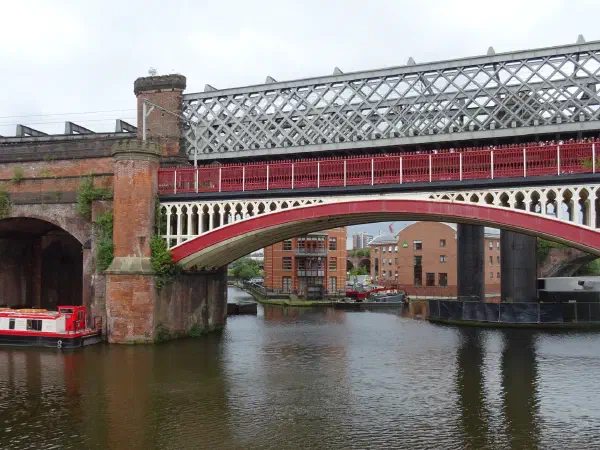
- Metrolink tram above — Include the tram bridge overhead to add a dynamic element; a slow shutter speed blurs the passing tram into a streak of light that contrasts with the static brick arches.
- Lock 91 details — Seek out the original lock mechanisms and lockkeeper’s cottage for close-up heritage shots that tell the canal’s working history, using a 50-85 mm lens to isolate the weathered ironwork and stonework.
How to shoot it
Lens
A 16–35mm wide takes in reflections and foreground; switch to a 70–200mm to compress distant detail across the water.
Settings
Tripod, f/11, ISO 100 and a 1–8s exposure for glassy water and clean reflections; an ND filter extends it in daylight.
Composition
Shoot low to maximise the reflection, use the waterline as a leading line, and wait for still water to double the scene.
Timing
Blue hour — the ~20 minutes after sunset — is the sweet spot: the sky balances with the city's lights. Be set up before it starts; today's window is on this page.
More in Castlefield
See the area →Nearby spots

Shooting the whole area? Read the Castlefield photography guide — every spot, the light that suits it, and a route to link them.