 Blue hour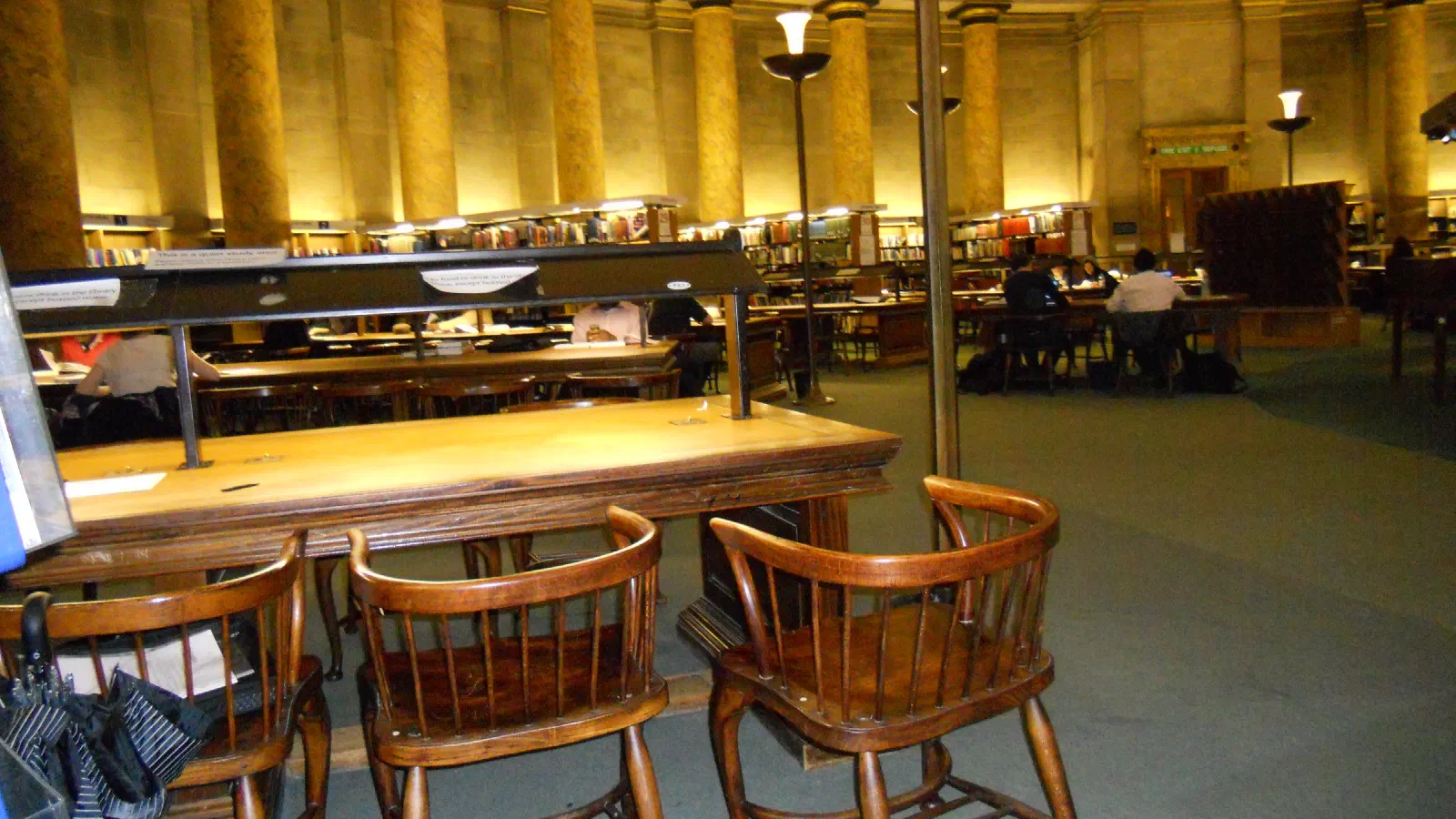
Best at any / overcast
Central Library Interior
City Centre · ManchesterSome gear links on this page are affiliate links — if you buy through them we may earn a small commission at no extra cost to you. See our affiliate disclosure.
What is Central Library Interior?
The interior of Manchester’s Central Library is a masterpiece of interwar neo-classical design by E. Vincent Harris, officially opened in 1934. Modeled on the Pantheon in Rome, the central rotunda hosts the majestic Great Hall—a circular reading room beneath a grand dome—lined with Tuscan columns and Portland stone finishes.
Inside, visitors descend through restored spaces featuring original furniture, ornate stonework, and carefully designed lighting. The dome’s rim bears an inscription from the Book of Proverbs:
“Wisdom is the principal thing; therefore get wisdom…”.
Other striking features include the Shakespeare Hall, rich with heraldic medallions, stained-glass windows by Robert Anning Bell and George Kruger Gray, Hopton Wood stone walls, and the “Reading Girl” marble statue by Giovanni Ciniselli.
After a major £50 million refurbishment (2010–2014), the library reopened with modern enhancements—glass lifts, refreshed circulation paths, and digital-ready spaces—yet preserved its historic grandeur and functional elegance.
Why Shoot Here?
The interior offers incredible photography opportunities for lovers of architecture and storytelling:
- Architectural drama: Capture the sweeping dome, radial seating arrangements, and concentric symmetry of the Great Hall—perfect for wide-angle and detail shots.
- Natural & ambient light: Soft daylight filtering in from the oculus above creates ethereal lighting; contrast it with warm spot lighting for layered mood.
- Texture and detail: The rich materials—stone, wood, bronze, stained glass—offer elegant subjects for close-up and macro photography.
- Inscriptions & symbolism: The Proverbs quote and heraldic artworks add narrative depth—ideal for editorial or interpretive shots.
- Before & after contrast: Photograph modern elements like glass lifts or open plan layouts juxtaposed with classical architecture to show time-layered evolution.
Getting There
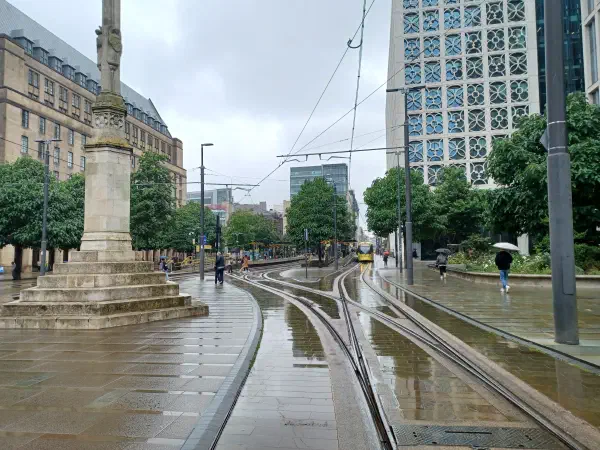
As easy as it gets: the St Peter’s Square Metrolink stop is directly outside, served by most lines on the network, and the library entrance is a minute from the platform. NCP Spinningfields is the nearest car park at roughly £8–12 per day, but with a tram stop on the doorstep there is little point driving.
Entry is free and there is no ticket or booking. Check current opening hours before travelling — the library closes earlier on Saturdays and is generally shut on Sundays, which catches people out. St Peter’s Square itself is worth twenty minutes on the way in or out, and the Midland Hotel is across the road.
Photography FAQ
Can you take photos inside Manchester Central Library?
Yes, for personal and non-commercial use. It is a working public library and a study space, which sets the etiquette: no flash, keep the shutter sound down if you can, and do not photograph people at the desks without asking. Commercial and organised shoots need permission from the library in advance.
Are tripods allowed in the Great Hall?
Not reliably. Staff will generally ask you to fold a tripod away in the Wolfson Reading Room, both because it obstructs a busy circular floor and because it disturbs people working. Assume handheld unless you have arranged access, and plan for it: a fast prime and a body you are happy to run at ISO 1600–3200 will get you more here than a tripod you are asked to put away.
What is the best time to photograph the dome?
Mid-morning to early afternoon, when light through the oculus is strong enough to model the coffered ceiling. Weekday mornings are the quietest, which matters because the shot everyone wants — straight up from the centre of the Great Hall — needs you to stand still in the middle of the floor for a moment without being in the way.
What lens works best for the interior?
An ultra-wide, 14–24mm, for the dome and the full sweep of the reading room; a 50–85mm for the Shakespeare Hall medallions, the stained glass and the “Reading Girl” statue. If you bring one lens, make it the wide — the building’s whole appeal is enclosing space, and a standard zoom cannot take it in.
Is it worth photographing on a grey day?
Yes, and arguably it is better. The dome glass diffuses overcast daylight into soft, shadowless illumination that flatters Portland stone and holds detail in the white surfaces, where direct sun blows out the highlights. This is one of the strongest wet-weather locations in the city.
Further Information
- Wikipedia – Manchester Central Library — architecture, history, dome, Shakespeare Hall, and collections
- Manchester City Council – History of Central Library — construction materials, design style, and historical context
- Ryder Architecture – Central Library Refurbishment — modern redesign approach and visitor impact post-restoration
- TimeOut – Hidden treasures and behind-the-scenes tour — special features and viewer insights
Best Times to Shoot
- Mid-morning (10-11 am) — Natural light from the oculus is strong enough to illuminate the dome’s interior details while the library is still relatively quiet, giving you space to set up a tripod like the Peak Design Travel Tripod for sharp, low-ISO interior frames.
- Early afternoon (midday to 2 pm) — Overhead sun sends the most even light through the dome, balancing illumination across the Great Hall and minimising deep shadows on the lower galleries.
- Weekday mornings — Visitor numbers are at their lowest, so you can capture the sweeping circular reading room without crowds cluttering the composition.
- Overcast days — Diffused daylight through the dome glass produces soft, shadowless illumination that flatters the Portland stone and prevents harsh contrast on the white surfaces.
Composition Ideas
- Directly beneath the dome — Stand at the centre of the Great Hall and shoot straight up with an ultra-wide lens like the 14-24mm f/2.8 to capture the full radial symmetry of the coffered ceiling and Tuscan columns.
- Spiral staircase and glass lift — Use the modern glass lift shaft or stairwells to create depth and leading lines; the transparency of the glass contrasts beautifully with the heavy stonework.
- Shakespeare Hall details — Isolate the heraldic medallions, stained-glass panels, or the “Reading Girl” statue with a 50-85 mm lens and wide aperture to separate the subject from the ornate background.
- Balcony overview — Shoot from the upper galleries looking down into the Great Hall to capture the concentric seating arrangement and the radial floor pattern, emphasising the Pantheon-inspired geometry.
How to shoot it
Lens
A 16–35mm wide captures the full space; bring a fast prime (f/1.8) for the dim corners without a tripod.
Settings
Tripod where allowed, f/8 and low ISO; otherwise a fast prime wide open. Bracket exposures to hold both windows and shadows.
Composition
Centre on symmetry, get low for soaring ceilings, and let leading lines pull the eye down the room.
Timing
Bright overcast suits it best — soft, even light with no harsh shadows — so it works at almost any time of day.
More in City Centre
See the area →Nearby spots
Shooting the whole area? Read the City Centre photography guide — every spot, the light that suits it, and a route to link them.