 Golden hour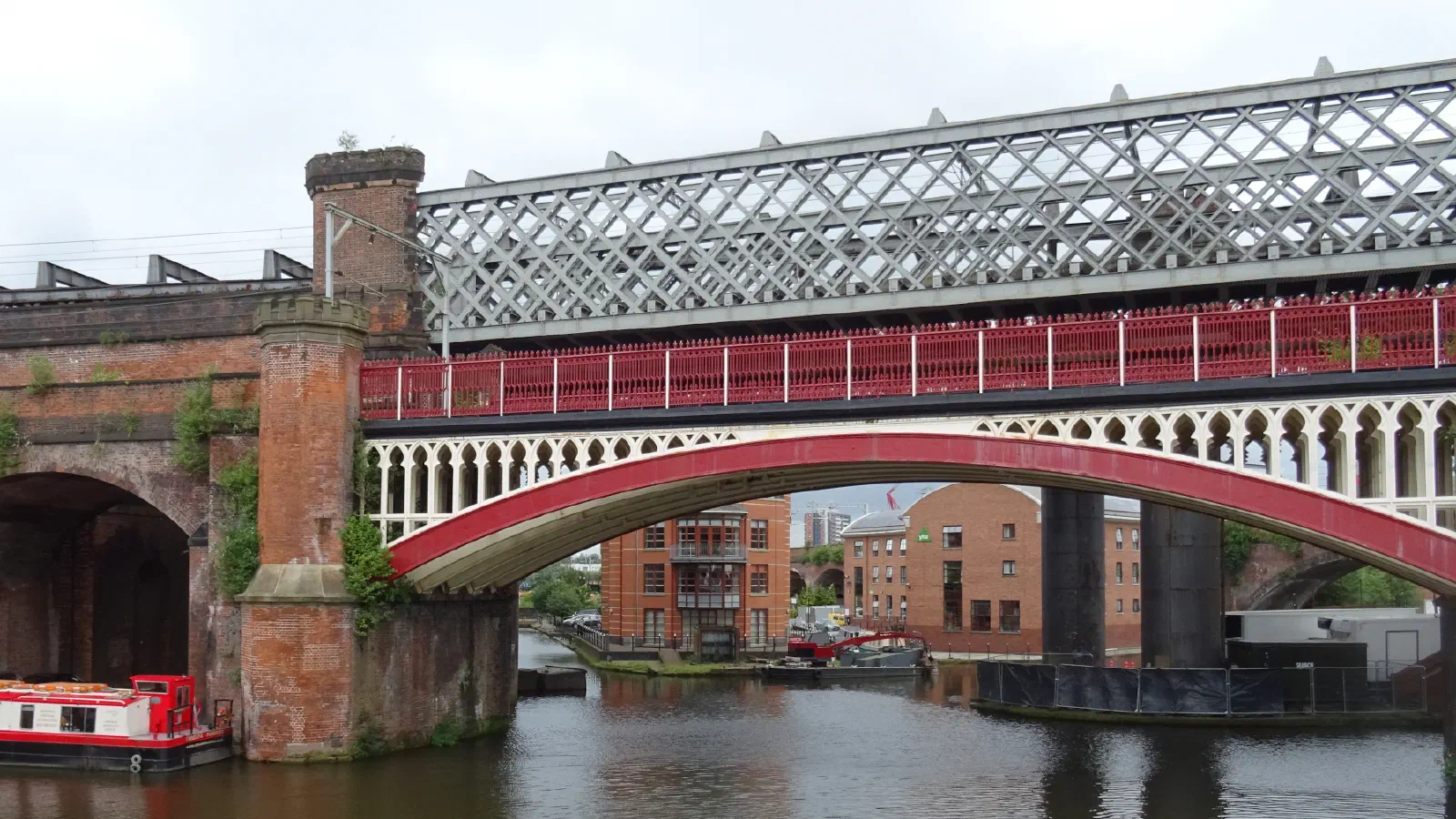
Best at golden hour
Castlefield Urban Heritage Park
Castlefield · ManchesterSome gear links on this page are affiliate links — if you buy through them we may earn a small commission at no extra cost to you. See our affiliate disclosure.
What is Castlefield Urban Heritage Park?
Castlefield Urban Heritage Park is the United Kingdom’s first designated urban heritage park, located in central Manchester. The area, designated as a conservation zone in 1980, earned its heritage park status in 1982.
Rooted in ancient history, Castlefield was the site of the Roman fort Mamucium, traces of which have been excavated and reconstructed for public exploration. During the Industrial Revolution, it became an inland port hub where the Bridgewater Canal (1761)—Britain’s first industrial canal—and the Rochdale Canal converged, complemented by a network of railway viaducts and early warehouses.
In the late 20th century, Castlefield was revitalised: canals and warehouses were restored, towpaths rejuvenated, and old industrial buildings converted into lively social venues. Today, the park merges Roman ruins, historic canals, industrial architecture, and modern leisure spaces under one harmonious conservation landscape.
Why Shoot Here?
Castlefield Urban Heritage Park is a photographer’s dream, offering rich layers of visual storytelling:
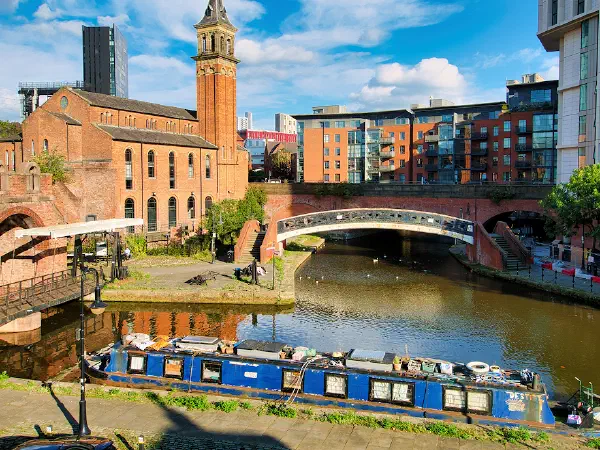
- Historic textures: Capture weathered red-brick warehouses, layered viaducts, Roman ruins, and canal reflections—each providing compelling textures.
- Reflections and framing: Calm canal waters reflect moored boats and old structures, perfect for symmetry and low-angle shots.
- Time-layer contrast: Blend elements from Roman times, Victorian railways, and modern regeneration in a single shot—illustrative of Manchester’s evolving narrative.
- Ambience and storytelling: Include visitors strolling, locals relaxing at bars, or cyclists on towpaths to convey the area’s lively yet serene character.
Getting There
Deansgate-Castlefield Metrolink is a three-minute walk and Deansgate rail station adjoins it. NCP Deansgate is the nearest car park at roughly £8–12 per day. The park is open at all times and free. Access is mostly level along the towpaths and the basin, but the connections between the street level and the canal level involve steps and ramps in places, and the towpath surface is uneven cobble and setts in the older sections — worth factoring in if you are carrying a tripod at dawn.
Everything here sits within a short walk of everything else. Castlefield Canals and Castlefield Bowl are inside the park itself, Castlefield Viaduct rises above it, the Bridgewater Canal runs through it and the Science and Industry Museum is at its northern edge — all in Castlefield, and all covered by the Castlefield canals and Deansgate walk.
Photography FAQ
Do you need permission to photograph in Castlefield Urban Heritage Park?
No. It is public open space, accessible at any hour and free, and photography including tripod work is unrestricted. The bars and restaurants along the basin are private premises with their own outdoor seating, so ask before setting up close to their tables. The towpaths are shared with cyclists and runners — a tripod on a narrow towpath at 08:00 on a weekday is a genuine obstruction, so pick your spot and be ready to move.
What is the best time to photograph Castlefield?
Sunrise to about 8am, if you want the reflections. Mist often sits over the canal basins early, the water is at its stillest before the day’s boat and towpath traffic, and the red brick softens in the low light. Golden hour is the alternative: late afternoon sun rakes across the layered viaduct arches and the Roman fort walls and deepens every texture. Blue hour is the one for long exposures, when the canal-side lamps come on and the residual sky glow still balances them.
What is there actually to photograph here?
Four eras in a few hundred metres, which is the point of the place. The reconstructed walls of the Roman fort Mamucium; the 18th-century canals where the Bridgewater and the Rochdale converge; the Victorian brick railway viaducts layered above the water; and the late-20th-century conversion of the warehouses into bars and flats. Composing so that two or three of those are in one frame is the shot that says Castlefield rather than generic canal.
What lens should I bring?
A 16–24mm wide is the one that earns its place — it lets you get low at the water’s edge for the symmetrical reflection, and it is the only way to take in a viaduct arch from underneath. A 35–50mm handles the layered towpath views where the arches recede into the distance. There is little here that needs a telephoto beyond isolating ironwork detail on the viaducts.
Is Castlefield a good place to shoot in bad weather?
Better than most. Overcast midday is genuinely useful here: it tames the harsh contrast under the viaducts, where direct sun otherwise puts one half of the arch in blackness, and it lets the saturated reds and greens of the brick and the water carry the image. Rain flattens the canal surface, and the arches give you somewhere dry to work from.
Further Information
- Wikipedia – Castlefield — historical overview including Roman origins, canals, rail, and conservation status
- Manchester City Council – Castlefield Conservation Area — details on reconstruction of Roman fort and heritage park planning
- City Unscripted – Best Things to Do in Castlefield, Manchester — insights on the charming canals, cobbled streets, and film/photo shoot appeal
- Tripadvisor – Castlefield Urban Heritage Park — visitor reviews and tips for exploring
Best Times to Shoot
- Early morning (sunrise to 8 am) — Mist often lingers over the canal basins, softening the red-brick warehouses and giving reflections a dreamlike quality before joggers and dog walkers arrive.
- Golden hour (late afternoon) — Warm low light rakes across the layered viaduct arches and Roman fort walls, deepening textures and casting long shadows that emphasise depth.
- Blue hour and dusk — Canal-side lamps flicker on while residual sky glow balances artificial light, producing rich reflections on the still water ideal for long exposures; something compact like the Peak Design Travel Tripod earns its place in the bag for these shots alone. Our Manchester architecture gear guide covers the tripod, wide lens and rain protection for this kind of session.
- Overcast midday — Flat, even light is surprisingly useful here; it tames harsh shadows under the viaducts and lets the saturated reds, greens, and greys of the heritage park speak for themselves.
Composition Ideas
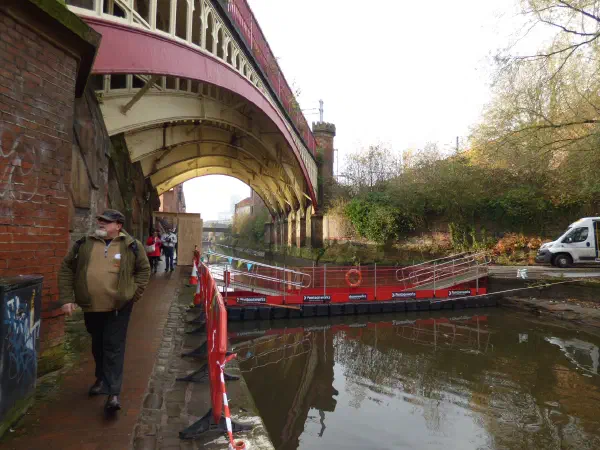
- Canal arch framing — Stand beneath one of the railway arches and use its curve to frame the Bridgewater Canal, a moored narrowboat, or the Roman fort reconstruction beyond.
- Layered viaduct depth — Position yourself along the towpath so multiple viaduct arches recede into the distance, creating strong leading lines that pull the viewer through the image.
- Low-angle reflections — Get close to the water’s edge with a wide-angle lens (16-24 mm) to capture a symmetrical mirror image of warehouses and sky on the canal surface.
- Roman ruins foreground interest — Use the reconstructed fort walls or excavated stonework as a textured foreground element, with Victorian rail arches and modern apartments layered behind to tell a story of three eras in one frame.
How to shoot it
Lens
A 16–35mm wide takes in reflections and foreground; switch to a 70–200mm to compress distant detail across the water.
Settings
Tripod, f/11, ISO 100 and a 1–8s exposure for glassy water and clean reflections; an ND filter extends it in daylight.
Composition
Shoot low to maximise the reflection, use the waterline as a leading line, and wait for still water to double the scene.
Timing
Aim for golden hour — the hour after sunrise or before sunset — when low, warm light rakes across the scene. Today's exact window is in the panel on this page.
More in Castlefield
See the area →Nearby spots
Shooting the whole area? Read the Castlefield photography guide — every spot, the light that suits it, and a route to link them.