 Golden hour
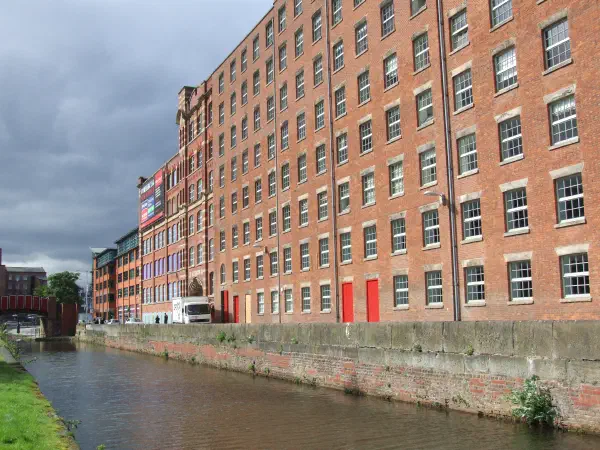
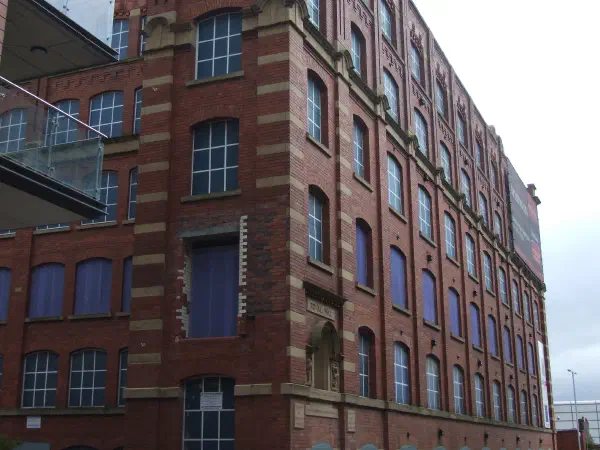
Once the heart of the industrial revolution, now a vibrant neighbourhood of restored mills and creative spaces. Red-brick facades, iron balconies, and modern street food courtyards make for a rich mix of old and new. Ancoats was once known as the world’s first industrial suburb, and that heritage is still visible in the massive mill buildings that line its streets.
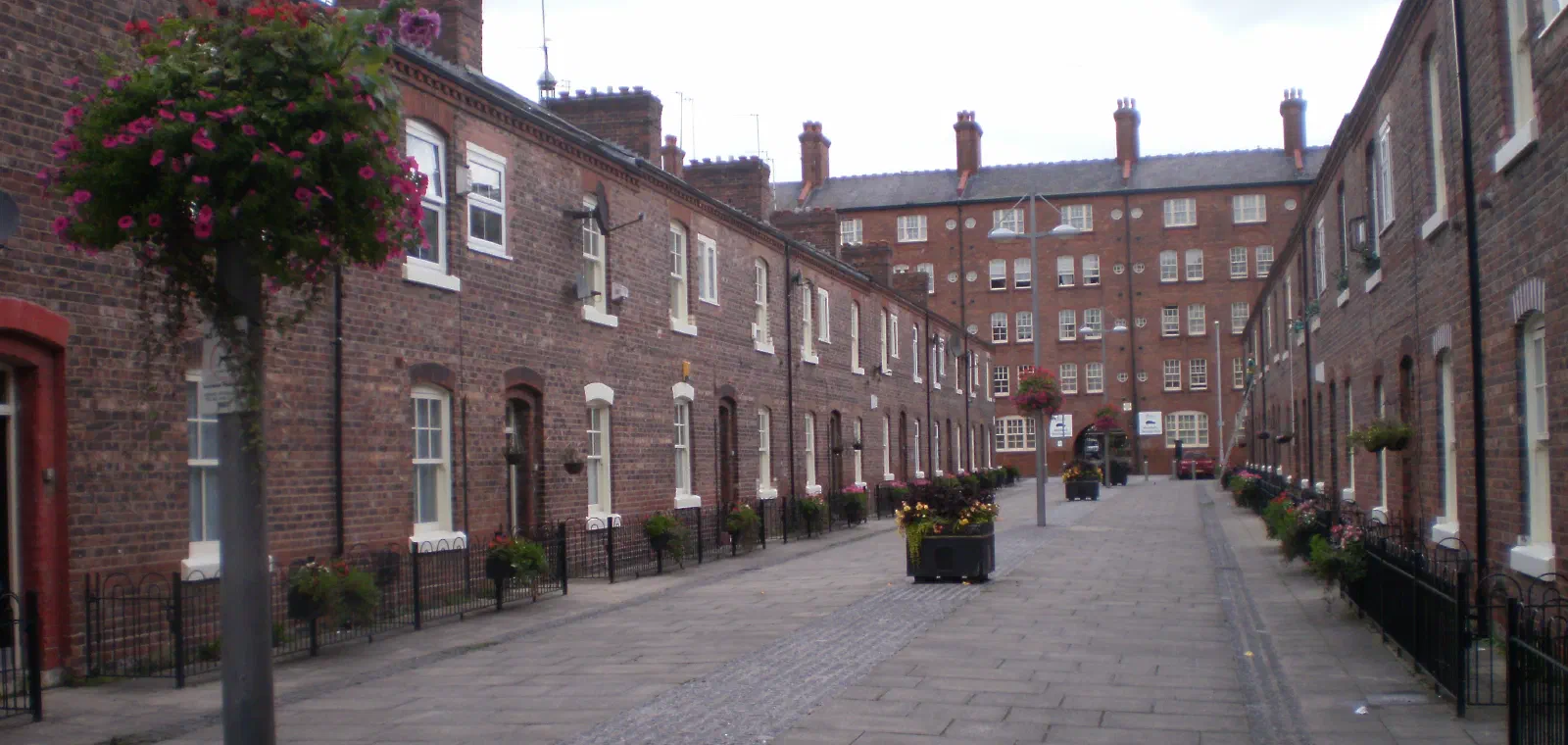
For photographers, the appeal lies in the contrast between rough industrial texture and contemporary design. Weathered brickwork sits next to freshly painted signage, and converted loading bays open onto landscaped public squares. The light filtering between the tall mill buildings can produce dramatic shadows, particularly along Cutting Room Square and the streets around Murrays’ Mills.
Expect strong subjects in architectural detail, street photography around the cafes and food halls, and urban landscape shots that capture the ongoing transformation.
Start with these three
If you only have an hour, walk this order — the three are within four minutes of each other on flat pavement.
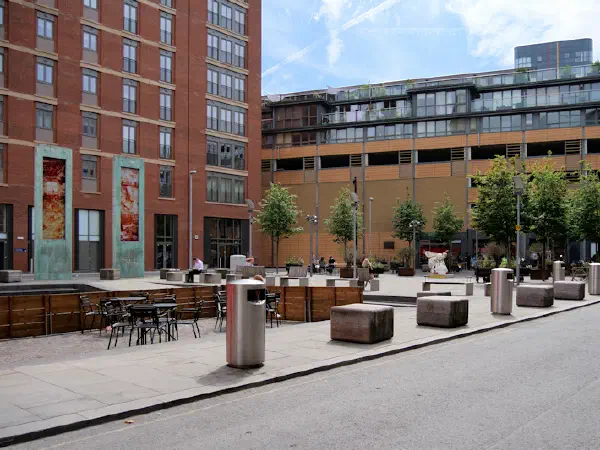
- Cutting Room Square — the natural centre of the neighbourhood, framed by the brick wall of Royal Mill and the Ice Plant. Dan Dubowitz’s sculptural monoliths carry photographs of the area’s industrial past, so you get a subject that is both graphic and about the place.
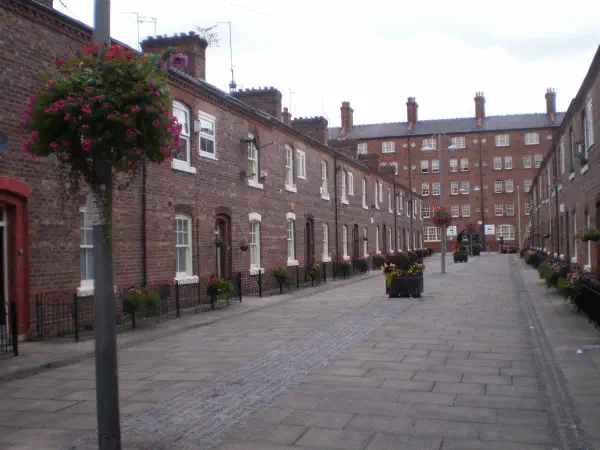
- Anita Street — a narrow, dead-straight Victorian terrace with uniform windows and original paving. Shoot it down the centre line for symmetry, or from one end for leading lines. It is residential, so work quickly and quietly.
- Murrays’ Mills — the oldest steam-powered cotton mill complex in the world, and the canal basin below gives you a mirror for the facade. This is the blue-hour subject of the three.
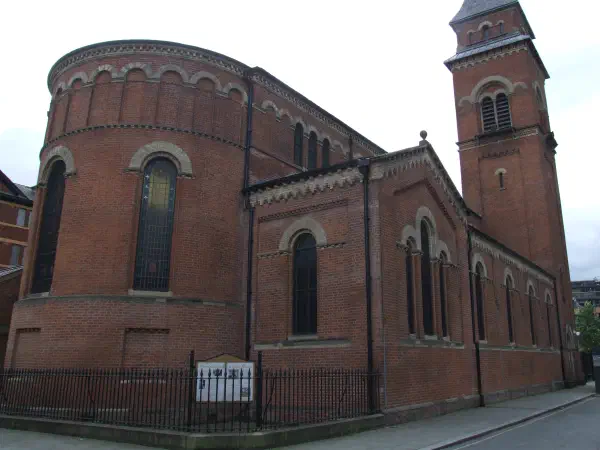
Add Hallé St Peter’s on Blossom Street if you have longer — the 1859 tower against the modern Oglesby Centre extension is the cleanest old-versus-new frame in Ancoats.
Best light in Ancoats
The mills are tall and the streets are narrow, which shapes everything. Direct midday sun leaves one terrace in hard shadow while the other blows out, so overcast days are genuinely better here than in most of the city — even light lets the brick colour and mortar texture carry the frame.
Golden hour is the exception: low sun coming down the east–west streets rakes across the brick and turns Royal Mill’s facade properly warm. Blue hour belongs to the water — the canal basin at Murrays’ Mills and the marina a few minutes east both go still in the evening, and the lit apartment windows double in the reflection.
Getting there and access
New Islington is the closest Metrolink stop, five minutes’ walk from Cutting Room Square; Shudehill works if you are coming from the Northern Quarter. Everything listed here is on flat pavement or canal towpath, so it is an easy area to cover with a heavier bag or a tripod.
The squares and streets are public. Hallé St Peter’s is a working rehearsal and recording space for the orchestra, so the interior is generally not open unless there is an event — plan around the exterior.
Pair it with
- The Ancoats mills and marina loop — a mapped route that strings these spots together in shooting order.
- Our full Ancoats photography guide — longer write-ups on each location, plus the shots that are worth the walk.
- Manchester blue hour photography guide — timing for the canal reflections, which are the area’s strongest evening subject.
- Neighbouring areas: Northern Quarter is a ten-minute walk west, East Manchester continues along the same canal to the east.
In this area
Ancoats spots
Walk it
A walk through Ancoats
75 minutes · 2 km
Ready-made route
Ancoats Mills & Marina Loop
A 75-minute Ancoats photo walk: Cutting Room Square, Anita Street's symmetry, Murrays' Mills and blue hour reflections at New Islington Marina.
75 minutes
2 km
6 stops